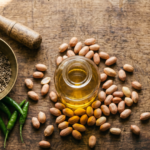

Are you confused about wood pressed sesame oil vs refined sesame oil? You are not alone. Many people in India buy sesame oil regularly — but most do not know the big difference between these two types. One goes through ancient wood pressing. The other goes through a factory with chemicals and heat. The choice you make every day in your kitchen directly affects your health, your taste, and your wallet. In this guide, we break down everything clearly so you can decide with confidence.
What Is Wood Pressed Sesame Oil?
Wood pressed sesame oil (also called cold pressed or chekku sesame oil) is made the old way. Sesame seeds go into a wooden churner — called a kolhu or chekku — that spins slowly at low speed. No heat is added. No chemicals are used. The oil comes out dark golden, thick, and full of natural goodness.
Because the process is slow and low-heat, the oil keeps all its natural lignans, Vitamin E, antioxidants, and healthy fats intact. At Srikruti Naturals, we use this exact process for our sesame oil — gravity filtered, stored in steel containers, and delivered fresh.
Key Features of Wood Pressed Sesame Oil
- No chemicals or preservatives
- Dark golden colour with a rich nutty aroma
- Low heat extraction — nutrients stay intact
- Higher smoke point than most cold pressed oils
- Retains natural sesamol and sesamin (powerful antioxidants)
What Is Refined Sesame Oil? How Is It Different?
Refined sesame oil goes through a heavy industrial process. First, seeds are crushed at very high temperatures (often above 200°C). Then the oil is bleached, deodorised, and treated with chemical solvents like hexane to extract every last drop of oil from the seed.
The result is a pale, almost colourless oil with very little smell. It looks clean. But most of the natural nutrients, antioxidants, and flavour have been destroyed in the process.
Why Refined Sesame Oil Has a Longer Shelf Life
Refined oil has a longer shelf life because the natural compounds that cause rancidity are removed. But those same compounds — like Vitamin E and lignans — are also the ones that protect your body. So a longer shelf life means fewer health benefits for you.

Wood Pressed vs Refined Sesame Oil: Nutrition Comparison
This is where the real difference shows up. Here is a side-by-side look at what you get with each type:
- Vitamin E: Wood pressed — high | Refined — very low (destroyed by heat)
- Sesamol & Sesamin (antioxidants): Wood pressed — present | Refined — mostly removed
- Lignans: Wood pressed — intact | Refined — degraded
- MUFA & PUFA: Wood pressed — balanced | Refined — chemically altered
- Chemical residues: Wood pressed — none | Refined — possible hexane traces
- Colour & Aroma: Wood pressed — dark golden, nutty | Refined — pale, neutral
In simple words: wood pressed sesame oil gives you the full nutritional profile of the sesame seed. Refined oil gives you mostly just fat and calories.
Which Is Better for Cooking? Wood Pressed or Refined Sesame Oil?
Both can be used for cooking — but the experience and health impact are very different.
Wood Pressed Sesame Oil for Cooking
- Smoke point: ~180°C — good for medium-heat cooking, tempering, and sautéing
- Adds rich nutty flavour to curries, rice dishes, and chutneys
- Best for South Indian recipes — especially gongura, pesarattu, and rice dishes
- Use as a finishing drizzle on salads or dals for extra flavour
Refined Sesame Oil for Cooking
- Higher smoke point (~232°C) — can be used for deep frying
- Neutral taste — does not add flavour
- Commonly used in packaged and processed foods
- Not recommended for regular home cooking due to chemical processing
Our recommendation: For daily home cooking, wood pressed sesame oil is the healthier and tastier choice. Use it for medium-heat cooking and finishing. If you need high-heat frying, consider wood pressed groundnut oil which has a higher smoke point.
Wood Pressed Sesame Oil for Skin and Hair: Is It Better?
Yes — and by a large margin. Wood pressed sesame oil is a beauty powerhouse that has been used in Ayurveda for centuries.
Skin Benefits of Wood Pressed Sesame Oil
- Natural SPF 4–6 — mild sun protection for daily use
- Antibacterial properties — helps with acne and skin infections
- Deep moisturising — absorbs quickly without a greasy feel
- Sesamol fights free radicals — slows skin ageing
Hair Benefits of Wood Pressed Sesame Oil
- Strengthens hair roots — reduces hair fall with regular massage
- Conditions scalp — treats dryness and dandruff
- Promotes hair growth due to minerals and Vitamin E
- Traditional use: warm oil head massage before bath
Refined sesame oil has very little benefit for skin or hair — the active compounds that make it effective have been removed during processing.
Wood Pressed Sesame Oil vs Refined: Which Should You Buy?
The answer depends on your priorities — but for most households, wood pressed sesame oil wins on every count that matters: nutrition, taste, and safety.
- Choose wood pressed if: you cook at home, care about nutrition, and want natural flavour
- Choose refined if: you need neutral-tasting oil for deep frying or packaged food production
If you want to try authentic wood pressed sesame oil made using the traditional kolhu method, check out Srikruti Naturals’ wood pressed oil range. Every bottle is fresh, chemical-free, and gravity filtered.
FAQs: Wood Pressed vs Refined Sesame Oil
Is wood pressed sesame oil the same as cold pressed?
Yes, mostly. Wood pressed and cold pressed both refer to low-heat, chemical-free extraction. Wood pressed specifically uses a wooden churner (kolhu). Both are far superior to refined oil.
Can I use wood pressed sesame oil for deep frying?
It is not ideal for deep frying due to its lower smoke point (~180°C). For high-heat frying, use wood pressed groundnut oil or coconut oil instead.
Why does wood pressed sesame oil smell so strong?
The strong nutty aroma is completely natural and is a sign of purity. Refined oil has no smell because the aromatic compounds are removed during deodorisation. If your sesame oil has no smell, it has been refined.
How long does wood pressed sesame oil last?
Typically 6–12 months when stored in a cool, dark place. Refrigeration extends shelf life. Always check for rancid smell before use.
Conclusion: Make the Switch to Wood Pressed Sesame Oil
When you compare wood pressed sesame oil vs refined, the verdict is clear. Wood pressed sesame oil keeps all the natural goodness of the sesame seed — nutrients, antioxidants, flavour, and aroma. Refined oil strips most of this away in exchange for a longer shelf life and a cheaper price tag.
Your health is worth the upgrade. Explore our cold pressed sesame oil and experience the real taste of traditional Indian cooking.