
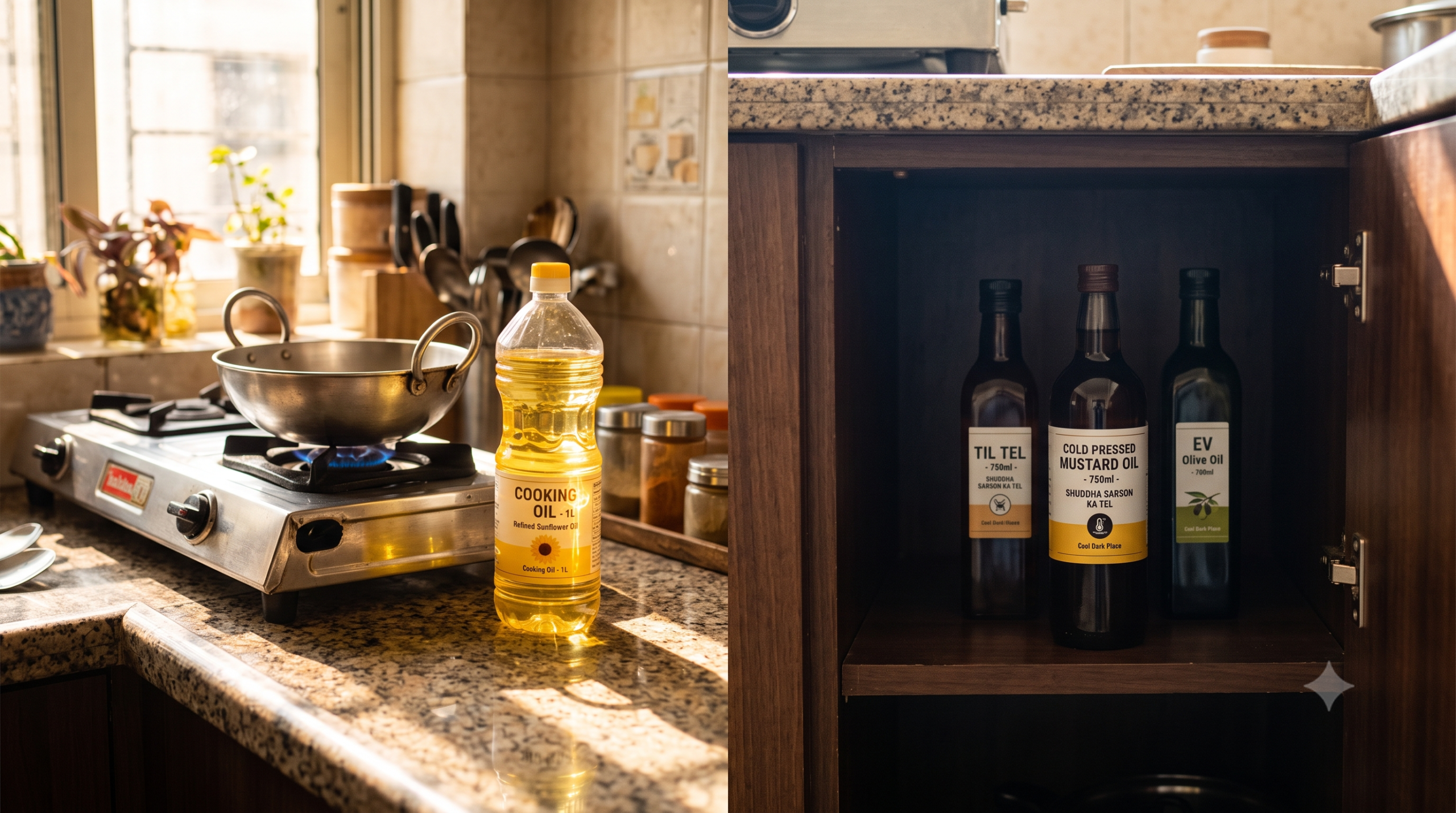
To store cold pressed oil correctly: keep it in a dark glass bottle, away from heat and sunlight, with the lid tightly closed after every use. Use within the shelf life printed on the label — most cold pressed oils last 6 to 12 months after opening. Most people already know cold pressed and wood pressed oils are better than refined oils. What most people do not know is that wrong storage can destroy those benefits completely — turning a good oil into something that actively harms you. Here are the seven mistakes that happen most often in Indian kitchens, and exactly how to fix each one.
Why Storage Matters More for Cold Pressed Oil Than Refined Oil
Refined oils are processed specifically to have a long, stable shelf life. The same high-heat chemical process that strips away nutrients also makes them more resistant to oxidation and rancidity. Cold pressed oils keep all their natural fatty acids, antioxidants, and active compounds — which is why they are better for you. But those same compounds are also more reactive to heat, light, and air. A study on lipid oxidation confirmed that unsaturated fatty acids in natural oils oxidise significantly faster when exposed to light and heat. When cold pressed oil oxidises, it does not just lose its benefits — it produces harmful free radicals. You are better off with refined oil than with rancid cold pressed oil. Storage is not optional — it is part of the product.
Quick Reference: Storage Guide by Oil Type
| Oil | Shelf Life | Best Container | Avoid |
| Cold Pressed Sesame | 6–8 months | Dark glass bottle | Plastic, sunlight |
| Cold Pressed Coconut | 18–24 months | Glass jar with lid | Wet spoon, moisture |
| Cold Pressed Flax Seed | 3–4 months | Dark glass, fridge | Heat, light, air |
| Cold Pressed Castor | 12 months | Dark glass bottle | Direct sunlight |
| Cold Pressed Mustard | 8–10 months | Dark glass bottle | Plastic, heat |
| Cold Pressed Groundnut | 6–9 months | Dark glass bottle | Sunlight, humidity |
| Wood Pressed Niger Seed | 6–8 months | Dark glass bottle | Plastic, moisture |
7 Mistakes That Destroy Cold Pressed Oil
Mistake 1 — Storing Near the Gas Stove
This is the most common mistake in Indian kitchens. The oil bottle sits right next to the stove for convenience. Every time you cook, heat radiates onto the bottle. Over weeks, this continuous low-level heat exposure accelerates oxidation. The oil does not smell rancid immediately — it happens gradually. By the time you notice an off smell, the oil has been degrading for weeks. Fix: keep oil in a cupboard at least one metre away from the stove. Take out only what you need for each cooking session.
Mistake 2 — Using a Transparent or Plastic Bottle
Light is one of the fastest triggers of oil oxidation. Transparent glass or plastic bottles let light reach the oil directly — even the ambient light of a kitchen counter is enough to start the process over time. Plastic adds another problem: it can leach chemicals into oil, especially in warm conditions. Cold pressed sesame oil, flax seed oil, and niger seed oil are especially sensitive to light because of their high polyunsaturated fat content. Fix: transfer oil to a dark amber or dark green glass bottle as soon as you open the original packaging. Srikruti Naturals already bottles in dark glass — do not transfer to plastic.
Mistake 3 — Not Closing the Lid Properly After Every Use
Air exposure triggers oxidation just like heat and light. Every minute the bottle sits open on the counter, oxygen is reacting with the unsaturated fatty acids in the oil. In humid monsoon kitchens, moisture also enters the bottle and accelerates the process further. This is especially damaging for flax seed oil and niger seed oil, which have the highest polyunsaturated fat content. Fix: close the lid tightly immediately after pouring. Do not leave the bottle open while cooking — pour first, close the bottle, then cook.
Mistake 4 — Using a Wet Spoon or Ladle
Water and oil do not mix — but water and oil oxidation do. When a wet spoon goes into the bottle, water droplets get introduced into the oil. Those droplets become sites for microbial growth and chemical hydrolysis — a process that breaks down fatty acids and produces off-flavours. Cold pressed coconut oil is particularly vulnerable to this because it solidifies at lower temperatures and traps moisture internally. Fix: always use a completely dry spoon or ladle. Better still, pour directly from the bottle and never dip anything into it.
Mistake 5 — Storing in the Fridge When You Should Not
The fridge seems like the obvious solution for freshness. For cold pressed flax seed oil, it is genuinely necessary — flax seed oil has such a high ALA content that it goes rancid within weeks at room temperature after opening. But for most other cold pressed oils — sesame, groundnut, mustard, castor — refrigeration is unnecessary and actually causes problems. Cold temperatures make these oils solidify or go cloudy, and repeated warming and cooling cycles stress the oil. Fix: flax seed oil in the fridge always. Everything else in a cool, dark cupboard at room temperature.
Mistake 6 — Buying in Bulk Without a Plan
Cold pressed oils have shorter shelf lives than refined oils — 6 to 12 months for most, 3 to 4 months for flax seed oil. Buying a 5-litre tin of cold pressed sesame oil to save money makes sense only if you will finish it within the shelf life after opening. A large quantity sitting half-used for 18 months is not a saving — it is a waste. Fix: buy in quantities you will finish within 3 to 4 months of opening. For rarely used oils like castor or flax seed, buy small bottles — 250ml or 500ml — and replace more frequently.
Mistake 7 — Ignoring the Smell Test
Cold pressed oil that has gone rancid has a distinctive smell — sharp, bitter, or paint-like. Many people notice it but assume it is just the natural smell of the oil. It is not. Fresh cold pressed sesame oil smells nutty and warm. Fresh mustard oil has a clean, pungent sharpness. Fresh flax seed oil smells slightly earthy. If any oil smells sour, metallic, or like old crayons — it is rancid. Using rancid oil is worse than using refined oil. Fix: smell the oil before every use. If it has changed, discard it. Do not cook with oil that smells wrong regardless of the price you paid.
How to Tell If Your Cold Pressed Oil Has Gone Bad
Three signs to check:
- Smell — sharp, bitter, metallic, or paint-like. Fresh oil smells like the seed it came from.
- Colour — darker than usual or cloudy when it should not be (excluding coconut oil which naturally solidifies in cold weather).
- Taste — bitter, harsh aftertaste. Fresh cold pressed oil tastes clean and characteristic of its seed.
If any one of these three is off — discard the oil. Rancid oil produces free radicals that increase oxidative stress in the body. No amount of other healthy eating compensates for cooking with rancid oil daily.
Best Containers to Store Cold Pressed Oil In
- Dark amber glass bottles — best for all cold pressed oils. Blocks UV light, non-reactive, easy to clean.
- Dark green glass — second best. Blocks most light. Common for olive oil — works equally well for any cold pressed oil.
- Stainless steel containers with lids — good for short-term storage, especially if you decant for daily use.
- Ceramic jars — traditional and effective. The ghani pot your grandmother used was often unglazed clay, which kept oil cool through evaporation.
- Avoid plastic entirely — even food-grade plastic leaches phthalates into oil over time, especially in Indian summer temperatures.
The Right Way to Store Cold Pressed Oil — Summary
- Dark glass bottle with a tight lid — always.
- Cool, dark cupboard — away from stove, sunlight, and windows.
- Dry spoon every time — never introduce water.
- Flax seed oil in the fridge — all others at room temperature.
- Buy in quantities you finish within 3 to 4 months of opening.
- Smell test before every use — discard anything that smells off.
Conclusion
Cold pressed oil is only as good as how you store cold pressed oil after buying it. The seven mistakes above are all easy to fix — most require nothing more than a different cupboard, a glass bottle, and the habit of closing the lid immediately. Do that consistently and your oil will stay at full nutritional quality until the last drop. Browse Srikruti Naturals’ range of cold pressed and wood pressed oils — all bottled in dark glass to give you the best start on storage from day one.
FREQUENTLY ASKED QUESTIONS
Q: How long does cold pressed oil last after opening?
Most cold pressed oils last 6 to 12 months after opening when stored correctly in a dark glass bottle away from heat and sunlight. Cold pressed flax seed oil is the exception — it lasts only 3 to 4 months after opening and should be stored in the fridge. Cold pressed coconut oil lasts the longest at 18 to 24 months because of its high saturated fat content.
Q: Should cold pressed oil be stored in the fridge?
Only cold pressed flax seed oil needs refrigeration after opening. Other cold pressed oils — sesame, groundnut, mustard, castor, coconut — do better at room temperature in a cool, dark cupboard. Refrigerating these oils causes unnecessary solidification and repeated temperature changes that can stress the oil.
Q: What is the best container to store cold pressed oil?
Dark amber glass bottles are the best container for storing cold pressed oil. They block UV light, do not react with the oil, and are easy to clean. Avoid plastic containers entirely — even food-grade plastic leaches chemicals into oil over time, especially in warm Indian kitchens.
Q: How do I know if cold pressed oil has gone bad?
Rancid cold pressed oil has a sharp, bitter, or paint-like smell — very different from the characteristic seed smell of fresh oil. It may also taste bitter or harsh. If the colour has darkened significantly or the smell has changed from when you first opened the bottle, discard the oil. Cooking with rancid oil produces free radicals and is worse than using refined oil.
Q: Why does cold pressed oil go rancid faster than refined oil?
Cold pressed oils retain all their natural unsaturated fatty acids, antioxidants, and active compounds — the same things that make them nutritionally superior. These compounds are more reactive to heat, light, and air than the processed fats in refined oil. Refined oils are specifically treated to resist oxidation, at the cost of most of their nutritional value. Correct storage compensates for this difference.
Q: Can I store cold pressed oil in a plastic bottle?
No. Plastic bottles are not suitable for cold pressed oil storage. Even food-grade plastic can leach phthalates and other chemicals into oil, especially in warm temperatures common in Indian kitchens. Always use dark glass bottles. If your cold pressed oil came in plastic packaging, transfer it to a dark glass bottle as soon as you open it.
Q: Does cold pressed oil need to be kept away from sunlight?
Yes. Sunlight and even ambient indoor light accelerates the oxidation of cold pressed oil. Light breaks down unsaturated fatty acids and destroys the antioxidants naturally present in the oil. Store cold pressed oil in a dark cupboard or pantry away from windows and the stove. Dark glass bottles provide an additional layer of protection.