Cold pressed coconut oil for cooking is becoming the first choice in Indian kitchens — and for good reason. You are standing in front of two bottles at a store. One says cold pressed. One says refined. Both look the same. However, they are not the same product at all.
So, let us start from the very beginning.
What Is Cold Pressed Coconut Oil? (And How Is It Made?)
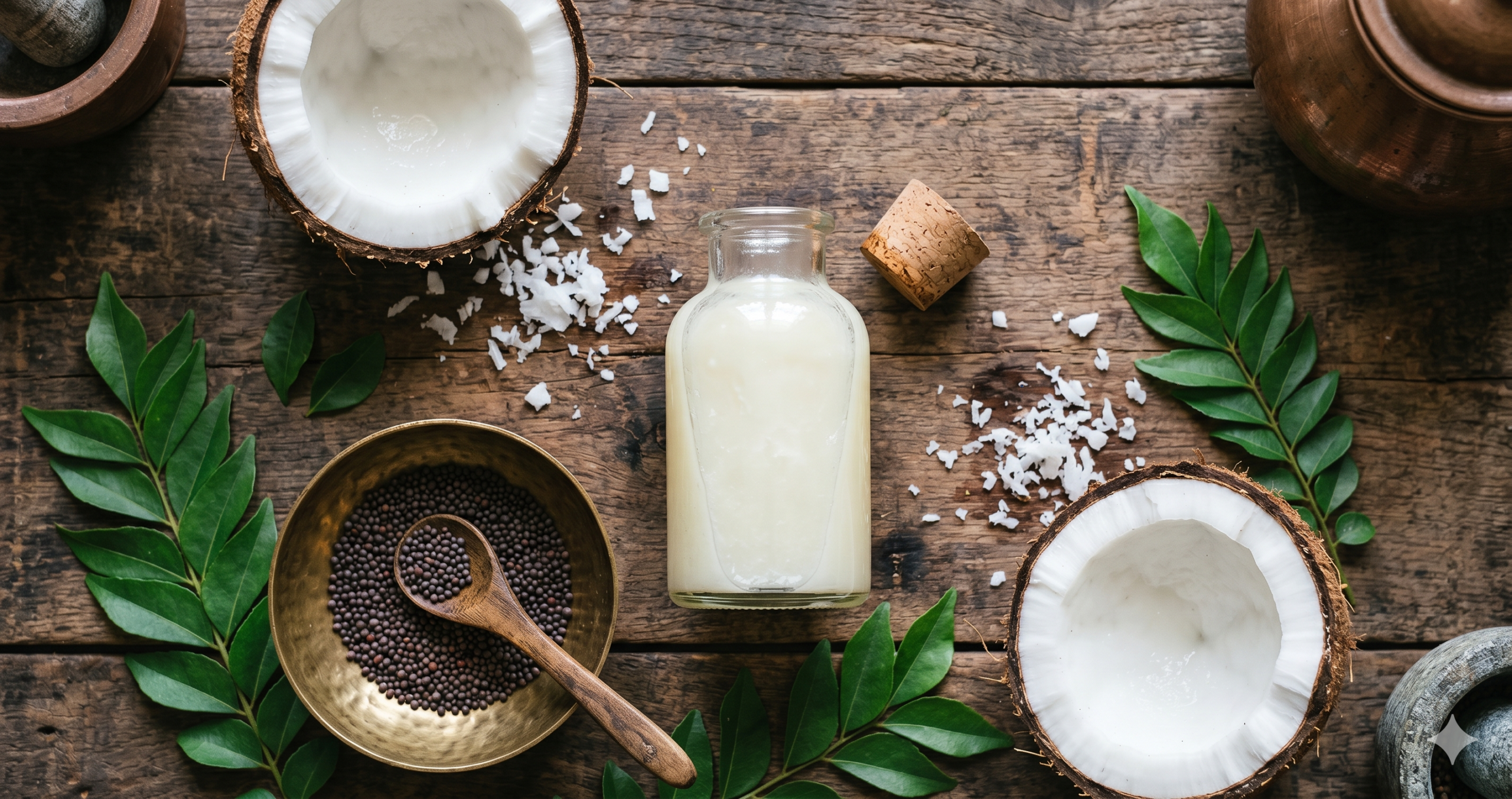
Specifically, cold pressed coconut oil is extracted from fresh coconut meat — not dried copra — using mechanical pressing at temperatures below 49°C. In other words, there is no heat treatment, no bleaching agents, and no chemical solvents involved.
Furthermore, the process preserves everything the coconut naturally contains — lauric acid, MCTs, antioxidants, natural enzymes, and that fresh coconut aroma that refined oil completely loses. As a result, you get oil in its most natural, nutrient-rich form.

Wood Pressed vs Cold Pressed Coconut Oil — Is There a Difference?
This is a common confusion. On one hand, wood pressed coconut oil uses a traditional wooden mill (called Kolhu or Chekku) to press dried copra slowly. It is a temperature-controlled, chemical-free process. In contrast, cold pressed oil uses modern mechanical expellers at controlled low temperatures from fresh coconut meat.
Therefore, at Srikruti Naturals, we combine the traditional approach of slow wood pressing with strict temperature control — giving you oil that is as close to what was made in Indian homes for centuries.
What Is Regular Refined Coconut Oil?
Regular coconut oil — labelled RBD (Refined, Bleached, Deodorized) — starts with dried coconut meat called copra. First, manufacturers press it under high heat. Then, they treat it with bleaching agents like fuller’s earth and subject it to chemical deodorisation.
As a result, you get a clear, odourless, neutral-tasting oil with a longer shelf life. Although producers make it cheaply and deliver a higher smoke point, the refining process strips out most antioxidants and polyphenols that make coconut oil a functional food.
💡 The term ‘extra virgin’ has no legal definition for coconut oil in India. Any brand can use it freely. Therefore, what matters is whether the brand cold presses and keeps the oil unrefined — not what the label says.
Cold Pressed Coconut Oil vs Regular Coconut Oil: Full Comparison
Here is a side-by-side breakdown of the two types:
| Feature | Cold Pressed Coconut Oil ✅ | Regular Refined Coconut Oil |
| Extraction Method | Fresh coconut, mechanical press below 49°C | Dried copra, high heat + solvents |
| Colour & Appearance | Milky white, solidifies below 24°C | Clear to yellowish |
| Smell & Taste | Fresh coconut aroma, natural flavour | Neutral, odourless |
| Nutrients Retained | MCTs, lauric acid, antioxidants, polyphenols | Basic — most nutrients stripped |
| Smoke Point | ~177°C (medium heat cooking) | ~232°C (high heat frying) |
| Best Use in Kitchen | Tadka, curries, sauté, dosas, baking | Deep frying only |
| Lauric Acid Content | ~47–49% (fully preserved) | ~47–49% (present but stripped of cofactors) |
| Processing Chemicals | None | Bleaching agents, deodorisers |
| Price Range (India) | ₹400–₹700 per litre | ₹150–₹300 per litre |
| Shelf Life | 12–18 months unopened | 18–24 months (longer due to refining) |
Nutrition: What Does Cold Pressed Coconut Oil Actually Give You?
Cold pressed coconut oil is one of the richest natural sources of medium-chain triglycerides (MCTs). So, here is what the nutrition profile looks like:
Lauric Acid
Lauric acid makes up approximately 47–49% of cold pressed coconut oil. Notably, it has documented antimicrobial and antiviral properties. Moreover, it supports gut health and immunity. In addition, researchers have studied its role in raising HDL (good cholesterol) without significantly impacting LDL.
MCTs — Medium Chain Triglycerides
The liver absorbs MCTs directly and converts them into quick energy rather than storing them as fat. Therefore, cold pressed coconut oil becomes a preferred choice for people managing weight, energy levels, or metabolic health in 2026. Furthermore, MCTs digest faster than long-chain fats, which means your body uses them more efficiently.
Antioxidants and Polyphenols
These exist only in cold pressed, unrefined oil. In contrast, refined coconut oil loses them completely during bleaching and deodorisation. Additionally, antioxidants protect cells from oxidative damage and support skin health from the inside.
FSSAI Note
💡 As per FSSAI cold pressed oil standards, cold pressed oils with minimal processing are considered nutritionally superior when used in moderation as part of a balanced Indian diet.
Is Cold Pressed Coconut Oil Good for Cooking? (Honest Answer)
Yes — with one important point to understand about smoke point. Cold pressed coconut oil for cooking works best at medium heat. Specifically, its smoke point is around 177°C, which is perfectly suitable for most Indian home cooking.
What Indian Dishes Can You Cook with Cold Pressed Coconut Oil?
Here are the everyday use cases where it performs exceptionally well:
- Tadka / Tempering: Mustard seeds, curry leaves, dried chillies — this oil gives a natural aromatic base for any dal or sabzi
- South Indian Curries: Sambar, rasam, avial, fish curry — coconut oil is a traditional flavour backbone in these dishes
- Dosas and Uttapam: Light greasing on a medium-hot tawa works perfectly
- Vegetable Stir Fries: Medium flame cooking where the natural flavour enhances the dish
- Egg Dishes: Omelettes, fried eggs on medium heat
- Baking: Replaces butter or refined oil in healthy cakes, cookies, and energy bars
- Oil Pulling and Direct Consumption: Traditional Ayurvedic practice for oral health
When Should You Use Refined Coconut Oil Instead?
Refined coconut oil has one legitimate advantage: its smoke point of 232°C makes it more suitable for very high-temperature deep frying — like puri, pakoras, or bhaturas at full flame. Nevertheless, for everything else, cold pressed is the better choice.
5 Reasons Indians Are Switching to Cold Pressed Coconut Oil in 2026
- No chemical residues: Zero bleaching agents, zero solvents — consequently, what you put in your food is pure oil
- Better taste and aroma: The fresh coconut flavour enhances South Indian dishes naturally — something refined oil simply cannot do
- Nutrient retention: Antioxidants and polyphenols survive only in cold pressed oil — whereas refined oil strips them completely
- Metabolic support: MCTs support energy metabolism and weight management — moreover, researchers are studying them for cognitive health benefits
- Return to traditional cooking: The ‘return to roots’ movement in India drives younger consumers back to wood pressed and cold pressed oils from their grandparents’ kitchens
How to Identify Real Cold Pressed Coconut Oil (Buyer’s Checklist)
The coconut oil market in India has a greenwashing problem. For example, terms like ‘farm-to-bottle’, ‘artisan’, ‘natural’, and even ‘extra virgin’ are used without any regulatory backing. Therefore, here is what to actually look for:
- ✅ Cold pressed or wood pressed — clearly stated on the label
- ✅ Unrefined — no bleaching, no deodorising mentioned
- ✅ No solvent extraction — hexane-free process
- ✅ Colour — milky white (not clear or yellowish)
- ✅ Solidifies below 24°C — pure coconut oil naturally solidifies in winter
- ✅ Source transparency — brand should be able to tell you where the coconuts come from
💡 Tip: If the oil is perfectly clear and has no coconut smell at room temperature, it is almost certainly refined — regardless of what the label says.
Frequently Asked Questions
Can I use cold pressed coconut oil for deep frying?
For occasional deep frying at moderate temperatures (below 175°C), yes. However, above 180°C, refined coconut oil or groundnut oil handles that heat far better.
Does cold pressed coconut oil have a strong smell?
Yes — it has a natural, mild coconut aroma. This enhances South Indian dishes naturally. However, if you prefer odourless oil, refined coconut oil suits neutral-flavour dishes better.
How should I store cold pressed coconut oil?
Simply store it in a cool, dry place away from direct sunlight. No refrigeration needed. It naturally solidifies below 24°C — this is completely normal and does not affect quality. Typically, proper storage keeps it fresh for 12–18 months.
Is cold pressed coconut oil good for babies and children?
Yes. This chemical-free oil is widely used in Indian households for infant massage, cooking for toddlers, and as a healthy fat source in children’s diets. Always check with your paediatrician for specific recommendations.
Final Verdict: Which One Should You Use?
For everyday Indian cooking at home, this oil is the clear winner for your kitchen. Specifically, it offers better nutrition, better flavour, and no chemicals. Furthermore, the slightly lower smoke point is not a problem for 90% of what happens in an Indian kitchen.
Choose refined coconut oil only when your cooking demands very high heat and a neutral taste. Otherwise, for daily tadka, curries, sautéing, dosas, and baking — cold pressed coconut oil suits your family’s health best.
Try Srikruti Naturals Wood Cold Pressed Coconut Oil — slow-pressed, chemical-free, the way it has always been done in Indian homes.
👉 Shop Srikruti Naturals → srikrutinaturals.com/store