
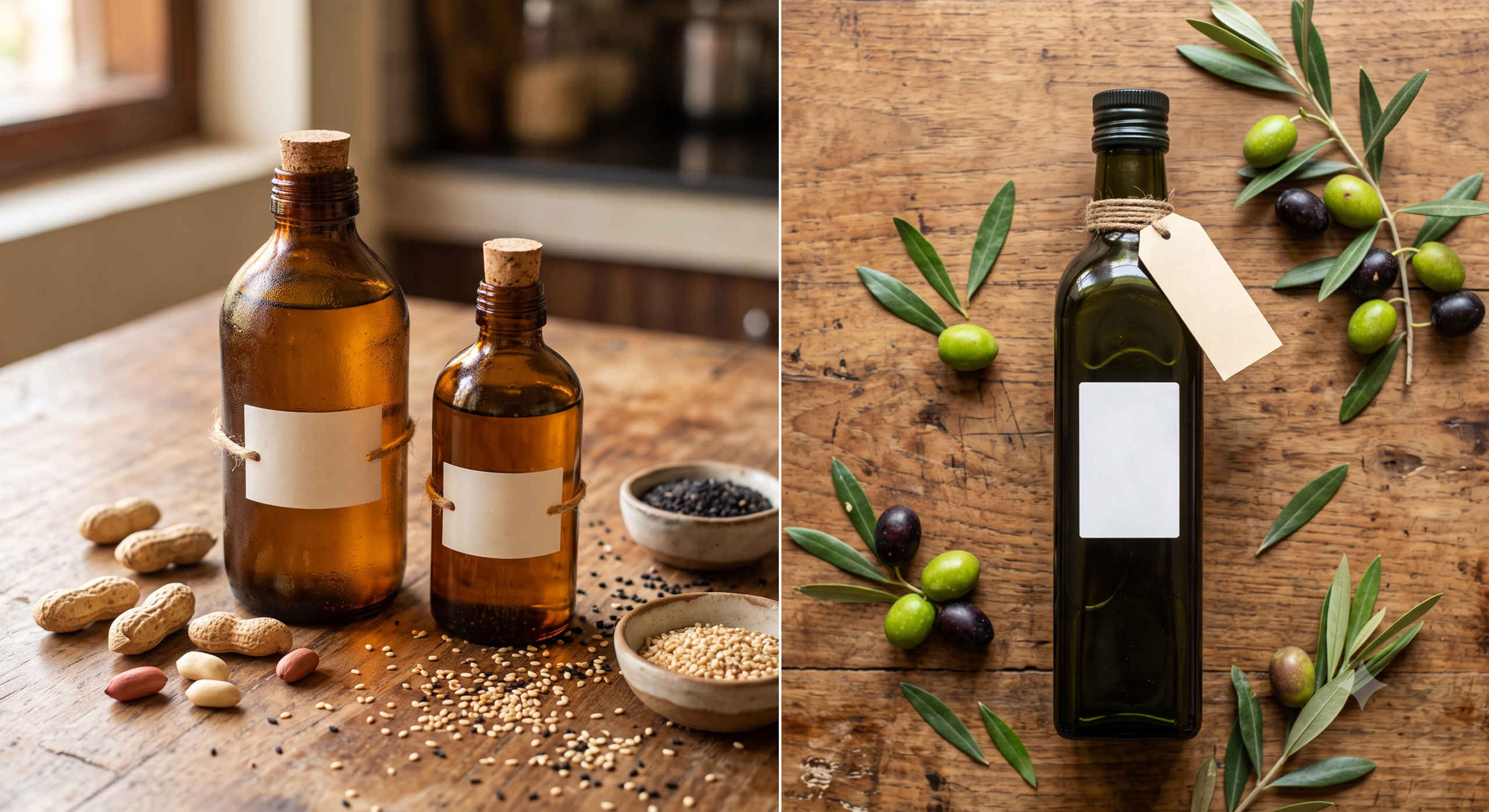
For Indian cooking, cold-pressed groundnut, sesame, and mustard oil are better than olive oil—higher smoke points, familiar flavors, and a fraction of the price. For raw use, like salads or drizzling, extra virgin olive oil has a richer polyphenol content. Olive oil has dominated the health-conscious kitchen conversation in India for over a decade. Supermarkets stock dozens of olive oil brands. Doctors recommend it. Fitness influencers swear by it. But most people who actually cook Indian food at home—tadka at high flame, deep-frying pakoras, making sambar—find olive oil either too expensive, wrong-flavored, or unusable at the temperatures Indian cooking demands. Cold-pressed oil vs olive oil is not really a contest for most Indian kitchens. But understanding exactly where each one wins helps you make better decisions for different uses.
The Core Difference — Origin, Not Just Process
Olive oil comes from one specific ingredient—olives. It is cold-pressed by definition in its best form (extra virgin olive oil). Cold-pressed Indian oils—groundnut, sesame, mustard, coconut, and flaxseed—come from a range of seeds and nuts that have been part of Indian cooking for thousands of years. So this is not really a process comparison. It is a comparison between one foreign oil and several native Indian oils, all of which can be cold-pressed.
Extra virgin olive oil (EVOO) is the only form worth comparing—it is the cold-pressed version of olive oil, unrefined, with full polyphenol content. Regular or light olive oil is refined and not worth the premium. When people ask about olive oil for health, they mean EVOO. That is what this comparison uses.
Full Comparison Table
| Factor | Cold Pressed Indian Oils ✅ | Extra Virgin Olive Oil |
| Smoke point | Groundnut 160°C, Sesame 175°C, Mustard 250°C | ~190–210°C (EVOO) |
| Best for Indian cooking | Deep frying, tadka, tempering, curries — yes | Salads, drizzling, low-heat — not suited for tadka |
| Flavour | Characteristic seed flavour — nutty, pungent, earthy | Fruity, grassy, slightly bitter — foreign to Indian dishes |
| Omega-3 content | Flax seed oil highest, mustard oil good ratio | Low omega-3 — primarily oleic acid (MUFA) |
| Polyphenols | Sesame oil high (sesamol, sesamin) | Very high — richest plant polyphenol source |
| Vitamin E | Sesame and groundnut oil — good levels | Moderate |
| Price per litre India | ₹300–₹700 depending on oil | ₹800–₹1,800 for genuine EVOO |
| Shelf life | 6–12 months after opening | 18–24 months — more stable |
| Availability India | Widely available — local, online, regional brands | Mostly imported — quality varies widely in Indian market |
| Suited for Indian skin/hair | Yes — sesame, castor, coconut well established | Limited traditional use in India |
Smoke Point — Why It Matters for Indian Cooking
Indian cooking is high-heat cooking. Tadka, tempering, deep frying, stir-frying in a kadai — these happen at temperatures between 180°C and 230°C. Smoke point is the temperature at which oil starts to break down, smoke, and produce harmful compounds.
Extra virgin olive oil has a smoke point of around 190 to 210°C. That sounds adequate, but in practice Indian tadka gets hotter than that quickly — and prolonged high-heat cooking degrades olive oil faster than its smoke point suggests. Cold pressed groundnut oil has a smoke point of around 160°C — lower than EVOO — but handles Indian cooking methods better because of its stable monounsaturated fat structure. Wood pressed mustard oil, at 250°C, handles the highest heat of any common Indian cooking oil.
The practical result: olive oil smokes and burns in a high-heat Indian tadka. Cold pressed mustard or groundnut oil does not.
Nutrition — Where Each One Wins
Where Olive Oil Wins
Polyphenol content. Extra virgin olive oil is genuinely the richest plant source of dietary polyphenols — compounds with proven anti-inflammatory, cardioprotective, and anti-cancer effects. A meta-analysis of olive oil cardiovascular studies found consistent benefits for heart health from regular EVOO consumption. This is real, evidence-backed, and not easily matched by Indian oils — sesame oil comes closest with sesamol and sesamin, but olive oil’s polyphenol diversity is broader.
Where Cold Pressed Indian Oils Win
- Omega-3 content — cold pressed flax seed oil and mustard oil have significantly more omega-3 than olive oil, which is almost entirely oleic acid (MUFA).
- Vitamin E — cold pressed sesame and groundnut oil have comparable or higher vitamin E than EVOO.
- Cooking stability — cold pressed Indian oils handle actual Indian cooking methods without degrading.
- Variety — different oils for different jobs. Sesame for tempering, groundnut for frying, castor for hair, coconut for children. Olive oil has one flavour profile and one use case.
- Price — genuine EVOO costs ₹800 to ₹1,800 per litre in India. Most of it is also adulterated or mislabelled at the lower end. Cold pressed groundnut oil costs ₹350 to ₹600 for the same quality guarantee.
Flavour — The Most Honest Difference
This is where olive oil simply does not work for Indian food. EVOO has a fruity, grassy, slightly peppery flavour. It is beautiful on bruschetta, pasta, and Mediterranean salads. On dal, rasam, biryani, or anything with Indian spices — it tastes wrong. Not bad, just wrong. The flavour clashes rather than complements.
Cold pressed sesame oil smells nutty and warm — the same aroma as the sesame seeds your grandmother toasted. Cold pressed mustard oil has a sharp, familiar pungency that Telugu and South Indian cooking was built around. These flavours do not clash with Indian spices. They complete them. For someone cooking Indian food daily, replacing their oil with EVOO is not just expensive — it makes the food taste different in a way that is hard to accept consistently.
Olive Oil in India — The Adulteration Problem
This is an important practical point most comparison articles ignore. The Indian olive oil market is heavily adulterated. FSSAI reports have found that a large percentage of olive oil sold in India — especially at lower price points — is blended with refined sunflower or pomace oil. Pomace oil is the lowest grade of olive oil, extracted with chemical solvents, not cold pressed. When you buy cheap ‘extra virgin olive oil’ in India, you are often buying refined oil with a premium label.
Cold pressed Indian oils from local producers are easier to verify — the colour, smell, and sediment checks work reliably. Genuine cold pressed groundnut or sesame oil from a trusted local brand is far more certain than imported or Indian-packed olive oil at the same price point.
When Olive Oil Does Make Sense
To be fair — there are situations where EVOO is the right choice even in an Indian context:
- Raw salad dressings — if you make Mediterranean-style salads, EVOO is genuinely the best oil for flavour and polyphenol content.
- Low-heat cooking where the flavour works — some fusion dishes, grilled chicken, or light sauteed vegetables where the fruity olive flavour adds something.
- Health supplementation — one tablespoon of EVOO daily as a supplement (not for cooking) is backed by significant research for cardiovascular health.
- Bread dipping — if your household eats bread with oil regularly, olive oil is excellent for this purpose.
For these specific uses, buy the best EVOO you can afford from a verified source. For everything else in an Indian kitchen, cold pressed native oils are better suited, more affordable, and equally nutritious.
The Verdict — Which One Should You Use
Use cold pressed Indian oils for all daily cooking — groundnut or sesame for most dishes, mustard for tempering and high heat, coconut for breakfast and children’s food. Keep a small bottle of good EVOO for raw use — salads, drizzling over finished dishes, or as a daily supplement tablespoon. Do not cook Indian food in olive oil. Do not pay EVOO prices for refined olive oil blends. And do not assume olive oil is nutritionally superior to cold pressed Indian oils — in most categories relevant to Indian health and cooking, it is not.
Conclusion
The cold pressed oil vs olive oil debate has a clear answer for Indian kitchens: native cold pressed oils win on cooking suitability, price, omega-3 content, and practical availability. Olive oil wins on polyphenol diversity — but only if you are buying genuine EVOO and using it raw. Most Indian households do neither. Switch your daily cooking oil to cold pressed groundnut, sesame, or mustard. Add a tablespoon of real EVOO to your salad if you want the polyphenol benefit. That combination covers everything.
Browse Srikruti Naturals’ full range of genuine wood pressed cold pressed oils — priced fairly, extracted traditionally, and built for Indian cooking.
FREQUENTLY ASKED QUESTIONS
Q: Is cold pressed oil better than olive oil for Indian cooking?
Yes, for most Indian cooking methods. Cold pressed groundnut oil, sesame oil, and mustard oil handle the high temperatures of Indian tadka and frying better than olive oil. They also have flavours that complement Indian spices naturally. Extra virgin olive oil is best used raw — for salads, drizzling, or as a daily supplement — not for high-heat Indian cooking.
Q: Is olive oil good for Indian cooking?
Genuine extra virgin olive oil can handle low to medium heat cooking but is not ideal for Indian high-heat methods like deep frying, tadka, or prolonged sauteing. Its fruity, grassy flavour also does not complement most Indian spices and dishes. For Indian cooking, cold pressed groundnut oil, sesame oil, or mustard oil are more practical and better suited.
Q: Which has more omega-3 — cold pressed oil or olive oil?
Cold pressed Indian oils generally have more omega-3 than olive oil. Cold pressed flax seed oil is the richest plant source of ALA omega-3. Wood pressed mustard oil has a good omega-3 to omega-6 ratio. Olive oil is primarily monounsaturated oleic acid with very little omega-3. If omega-3 is your goal, cold pressed flax seed or mustard oil is far superior to olive oil.
Q: Is olive oil adulterated in India?
Yes, olive oil adulteration is a documented problem in India. FSSAI and consumer reports have found many olive oil brands sold in India — especially at lower price points — blended with refined sunflower oil or pomace oil, which is the lowest-grade olive oil extracted with chemical solvents. Buying cold pressed Indian oils from verified local producers is easier to authenticate through colour, smell, and sediment checks.
Q: Can I replace olive oil with cold pressed sesame oil?
Yes, cold pressed sesame oil is an excellent replacement for olive oil in Indian cooking. It has a comparable monounsaturated fat content, natural antioxidants (sesamol and sesamin), and a flavour profile that complements Indian food far better than olive oil. For raw use in salads or drizzling, sesame oil’s nutty flavour works well in Asian-style dishes. For Mediterranean-style use, extra virgin olive oil still has the polyphenol advantage.
Q: Which is cheaper — cold pressed oil or olive oil in India?
Cold pressed Indian oils are significantly cheaper than genuine extra virgin olive oil in India. Cold pressed groundnut oil costs approximately ₹350 to ₹600 per litre. Genuine EVOO costs ₹800 to ₹1,800 per litre — and cheaper olive oil in India is often adulterated. For the same budget, you can buy more cold pressed Indian oil of verified quality than you can buy reliable EVOO.
Q: Which cold pressed oil is closest to olive oil in nutrition?
Cold pressed groundnut oil is the closest Indian oil to olive oil nutritionally — both are high in monounsaturated fats (MUFA), have comparable vitamin E content, and support heart health in similar ways. Cold pressed sesame oil adds antioxidants (sesamol, sesamin) that olive oil does not have. Neither matches EVOO’s polyphenol diversity for raw use, but for cooking, cold pressed groundnut oil is the most direct Indian equivalent to olive oil.