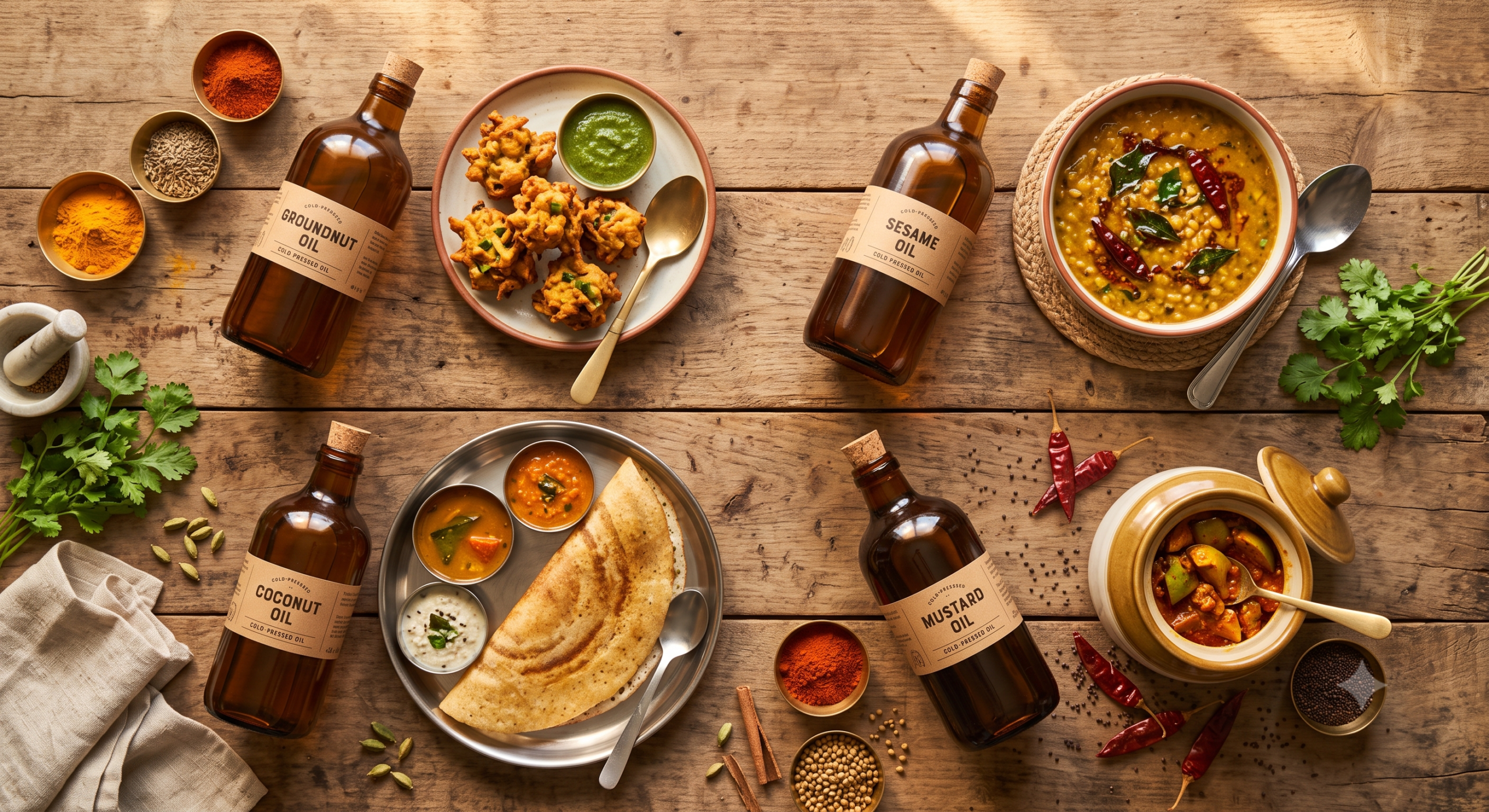
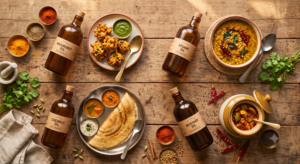
For cold-pressed Indian cooking, use groundnut oil for deep frying, sesame oil for South Indian tadka and sambar, mustard oil for North Indian cooking and pickling, coconut oil for South Indian breakfast and flaxseed oil raw in curd — never heated. Most people who switch to cold-pressed oil make one mistake—they buy a single bottle and use it for everything. That is not how cold pressed oil works, and it is not how Indian cooking was designed. Every regional Indian cuisine evolved around a specific local oil because that oil suited the dish, the temperature, and the flavor. This guide maps every major Indian dish to the right cold-pressed oil, so your cooking actually tastes better—not just healthier.
Why Different Dishes Need Different Oils
Oil is not just a cooking medium in Indian food. It is a flavor base. The oil you choose for tadka sets the flavour tone for the entire dish before a single spice goes in. Choose wrong and the dish tastes flat, foreign, or overdone.
Beyond flavour, smoke point matters. Indian cooking is often high-heat — a kadai tadka can reach 200°C or more within seconds. Using an oil with a low smoke point at that temperature creates smoke, bitterness, and harmful oxidation compounds. Cold-pressed Indian cooking requires matching each oil to the heat level of the specific dish, not just using whatever is on the counter.
Quick Reference — Oil by Dish
| Dish / Method | Best Oil | Why |
| Deep frying — pakora, puri, vada | Cold pressed groundnut oil | Neutral flavour, stable at frying heat |
| Dal tadka — South Indian | Cold pressed sesame oil | Nutty depth, authentic South Indian base |
| Dal tadka — North Indian | Wood pressed mustard oil | Pungency transforms beautifully with spices |
| Sambar & rasam | Cold pressed sesame oil | Traditional pairing, non-negotiable flavour |
| Biryani base | Cold pressed groundnut oil | Neutral — lets spices and meat lead |
| Roti & chapati tawa | Cold pressed groundnut oil | Light coating, does not overpower wheat |
| Stir-fried sabzi | Groundnut or sesame oil | Medium-high heat, adds flavour or neutral |
| Pickling (achar) | Wood pressed mustard oil | Natural preservative, traditional flavour |
| South Indian breakfast | Coconut or sesame oil | Regional authenticity |
| Indian sweets & halwa | Coconut oil | Flavour compatibility, medium heat |
| Fish curry — Bengali | Wood pressed mustard oil | Defining fat of Bengali cuisine |
| Fish curry — Kerala | Coconut oil | Coastal tradition, coconut base |
| Chicken & mutton curry | Groundnut or mustard oil | High heat, strong base flavour |
| Dosa & idli tawa | Sesame or coconut oil | Non-stick finish, authentic flavour |
| Raw — curd, salad, raita | Flax seed oil | Omega-3, do not heat — add raw only |
Which Oil to Use — Dish by Dish
Which Oil for Deep Frying (Pakora, Puri, Vada, Bonda)
Answer: cold pressed groundnut oil.
Cold pressed groundnut oil has the right combination of neutral flavour and structural stability for deep frying. It does not overpower the item being fried—the spicing in the batter leads. It handles repeated heat cycles without breaking down as quickly as lighter oils. For most South Indian households already using groundnut oil for frying, switching to the cold-pressed version is the easiest upgrade with zero change to how the food tastes. Mustard oil also works for deep frying in Bengali or North Indian cooking — it adds its own flavour to the fried item, which suits dishes like machher jhol or spiced vadas.
Which Oil for Dal Tadka
Answer: cold-pressed sesame oil for South Indian dal and wood-pressed mustard oil for North Indian dal.
The tadka oil defines the dal. Cold-pressed sesame oil in a South Indian tadka—with curry leaves, mustard seeds, and dry red chili—creates the authentic flavor base that no other oil replicates. It is not interchangeable. If you have ever eaten dal in a traditional South Indian home and wondered why yours tastes different, the answer is often the oil.
For North Indian dal—tarka dal, dal makhani base, dal fry—wood-pressed mustard oil transforms when cumin, garlic, and ginger hit it. The initial pungency mellows into a warm, rounded depth that is the backbone of North Indian home cooking.
Which Oil for Sambar and Rasam
Answer: cold-pressed sesame oil—no substitution.
Cold-pressed sesame oil for sambar tempering is non-negotiable in traditional South Indian cooking. The combination of sesame oil with mustard seeds, curry leaves, dried red chilli, and asafoetida creates the specific aroma that makes sambar smell like sambar. Rasam tempering follows the same logic. Using groundnut or coconut oil here changes the flavour profile significantly. If your sambar has been tasting off, this is likely the reason.
Which Oil for Biryani
Answer: cold pressed groundnut oil for the base, optional coconut oil finish.
Biryani needs a neutral base oil that lets saffron, whole spices, caramelized onion, and meat or vegetable aromas dominate. Cold pressed groundnut oil does this without interfering. Some biryani traditions use ghee for the final layer—cold-pressed coconut oil works as a partial substitute here, adding richness without a competing flavor. Do not use sesame or mustard oil in biryani—their flavours are too strong and do not belong in that dish.
Which Oil for Pickling (Achar)
Answer: wood-pressed mustard oil—always.
Traditional Indian achar uses mustard oil because allyl isothiocyanate — the compound that makes mustard oil pungent — is a natural antimicrobial. It is why pickles made with mustard oil last for months or years at room temperature without spoiling. No other cold-pressed oil replicates this. If you use groundnut or sesame oil for pickling, the shelf life drops dramatically and the traditional flavor is completely different. For South Indian pickles like gongura or avakaya, mustard oil is what gives them their characteristic bite.
Which Oil for South Indian Breakfast (Upma, Poha, Dosa, Idli)
Answer: coconut oil or sesame oil depending on the dish.
Upma and poha : Coconut oil adds the subtle sweetness and authenticity that South Indian breakfast demands. Dosa tawa: sesame oil creates the right non-stick finish and adds the nutty flavor that makes a dosa taste like it came from a restaurant. Idli: light sesame oil brushing before steaming helps with release and adds flavor. The two oils can rotate—some households use sesame oil for everything; others prefer coconut for breakfast and sesame for meals. Both are correct.
Which Oil for Fish Curry
Answer: Mustard oil for Bengali and North Indian fish and coconut oil for Kerala and coastal fish.
This is purely regional, and there is no wrong answer—both are traditional. Bengali fish curry (machher jhol) is built around mustard oil—the fish is marinated in it, fried in it, and the gravy is cooked in it. The flavor is inseparable from the oil. Kerala fish curry uses coconut oil as the base, which suits the coconut milk and tamarind profile of the dish perfectly. Using the wrong oil in either case produces a dish that is technically correct but authentically wrong.
Which Oil for Indian Sweets and Halva?
Answer: coconut oil or a blend with ghee.
Coconut oil handles the medium heat of sweet-making and adds a mild, compatible flavor to most Indian sweets. Gajar halwa, suji halwa, payasam, and ladoos work well with coconut oil as a partial or full ghee substitute. Groundnut oil can be used for neutral-flavored sweets but adds nothing to the dish. Sesame or mustard oil is too strongly flavored for most sweet preparations.
Which Oil to Use Raw (Salads, Curd, Raita)
Answer: cold pressed flaxseed oil—one teaspoon daily, never heated.
Cold pressed flaxseed oil is not a cooking oil—it is a raw nutritional supplement. Its ALA omega-3 content is the highest of any plant oil, but it degrades immediately with heat. Add one teaspoon to your morning curd, stir into raita before serving, or mix into a salad dressing. The earthy, slightly nutty flavor blends into curd and raita without dominating. This single daily habit covers your plant omega-3 intake without changing how you cook anything else.
The Rotation Principle — Why Indian Cooking Used Multiple Oils
Traditional Indian kitchens never used one oil for everything. Different oils for different dishes, different seasons, different cooking methods. This was not random — it naturally provided a balanced intake of monounsaturated fat (groundnut), omega-3 (mustard, flax), antioxidants (sesame), and medium-chain fatty acids (coconut) without anyone thinking about nutrition science.
A practical daily rotation for cold pressed Indian cooking:
- Morning breakfast — coconut or sesame oil.
- Lunch tadka and tempering — sesame oil for South Indian, mustard for North Indian.
- Main cooking and frying — cold pressed groundnut oil.
- Raw addition — one teaspoon flax seed oil in afternoon curd.
- Total per person — 3 to 4 teaspoons across the day. Replace refined oil, do not add on top.
What Happens When You Use the Wrong Oil
Using mustard oil in sambar — the pungency does not mellow the same way and the dish tastes harsh. Using sesame oil for deep frying pakoras — the strong flavour overpowers the batter. Using coconut oil for North Indian tadka — the sweetness clashes with the spice profile. Using flax seed oil for cooking — it oxidises and produces harmful compounds, defeating the purpose entirely.
Cold pressed Indian cooking is not just about using cold pressed oil instead of refined oil. It is about using the right cold pressed oil in the right dish. That is when you notice the actual difference.
Conclusion
The secret to better cold pressed Indian cooking is not one special oil — it is knowing which oil belongs in which dish. Groundnut for frying and biryani. Sesame for South Indian tadka, sambar, and dosa. Mustard for North Indian tempering, fish curry, and pickling. Coconut for breakfast and sweets. Flax seed oil raw in your daily curd. Keep all five, use each for its purpose, and your food will taste the way it was always supposed to.
Browse Srikruti Naturals‘ complete range of cold pressed and wood pressed oils — each made the traditional way for Indian cooking.
FREQUENTLY ASKED QUESTION
Q: Which cold pressed oil is best for Indian cooking?
Cold pressed groundnut oil is the most versatile option for everyday Indian cooking — it handles high heat, has a neutral flavour, and suits most dishes. For South Indian cooking specifically, cold pressed sesame oil is essential for tadka and sambar. For North Indian cooking, wood pressed mustard oil is the traditional and most authentic choice. No single oil covers all Indian cooking perfectly — a rotation of groundnut, sesame, mustard, and coconut covers everything.
Q: Which oil is best for tadka in Indian cooking?
Cold pressed sesame oil for South Indian tadka — it creates the authentic nutty base for dal, sambar, and rasam. Wood pressed mustard oil for North Indian tadka — its pungency mellows into a warm, rounded flavour when cumin, garlic, and ginger hit the hot oil. The choice depends on which regional cuisine you are cooking. Using the wrong oil significantly changes the final flavour of the dish.
Q: Can I use cold pressed oil for deep frying?
Yes. Cold pressed groundnut oil is the best choice for deep frying Indian food — it has a smoke point of approximately 160°C, handles repeated heat cycles, and has a neutral flavour that does not overpower fried items. Wood pressed mustard oil at 250°C smoke point is even better for sustained high-heat frying and is the traditional oil for Bengali and North Indian deep frying. Avoid using sesame or coconut oil for deep frying — they are better suited for medium heat cooking.
Q: Which oil should I use for sambar?
Cold pressed sesame oil for sambar tempering — this is the traditional South Indian choice and the flavour is non-negotiable for authentic sambar. The sesame oil, mustard seeds, curry leaves, dry red chilli, and asafoetida combination creates the specific aroma that defines the dish. Using groundnut or coconut oil instead produces a noticeably different and less authentic flavour.
Q: Which cold pressed oil is best for biryani?
Cold pressed groundnut oil for the biryani base — its neutral flavour lets saffron, whole spices, and the meat or vegetables lead without competing. Some biryani traditions use ghee for the final layering — cold pressed coconut oil works as a partial ghee substitute. Avoid sesame or mustard oil in biryani as their strong flavours do not suit the dish’s spice profile.
Q: Can I use mustard oil for all Indian cooking?
Wood pressed mustard oil is excellent for North Indian cooking, high-heat tadka, pickling, and fish curries. But its strong pungency does not suit all dishes — biryani, Indian sweets, South Indian sambar, and coconut-based curries are better made with other oils. For most South Indian households, mustard oil is better used for specific dishes rather than as the daily cooking oil for everything.
Q: Which cold pressed oil should I not heat?
Cold pressed flax seed oil should never be heated. Its ALA omega-3 content degrades immediately at cooking temperatures and produces harmful oxidation compounds. Always add flax seed oil raw — stir into curd, raita, or salad after the dish is finished and off the heat. One teaspoon daily is the standard amount. Think of it as a nutritional supplement you add to food, not a cooking oil.