India has a heart problem. Not a small one. The country accounts for nearly one-fifth of all cardiovascular deaths globally, and the average age of a first heart attack in India keeps dropping. Most conversations about heart health focus on exercise, stress, and smoking. But one thing that quietly contributes every single day — three times a day, in fact — is the cooking oil you use. Cold-pressed oil heart health is not a trend. It is basic nutrition logic. The oil you cook with either helps your arteries or quietly works against them. Here is what the research actually says and which oils are worth switching to.
Why Your Cooking Oil Matters More Than You Think
Most Indian households cook with refined sunflower oil or palmolein. Both are cheap and widely available. But both go through high-heat chemical processing that damages the natural fatty acid structure and strips away protective antioxidants. What is left is a fat that raises LDL cholesterol, promotes inflammation, and contributes to arterial plaque over time.
Cold pressed and wood pressed oil vs refined oil — the difference is significant. Cold-pressed oils are extracted at low temperatures without chemical solvents. So they keep their natural vitamin E, polyphenols, and balanced fatty acid profile intact. These are exactly the nutrients your cardiovascular system relies on. Switching oils does not cure heart disease. But it removes one daily source of harm and replaces it with daily nutritional support. Over months and years, that matters.
5 Best Cold Pressed Oils for Heart Health
1. Wood Pressed Mustard Oil
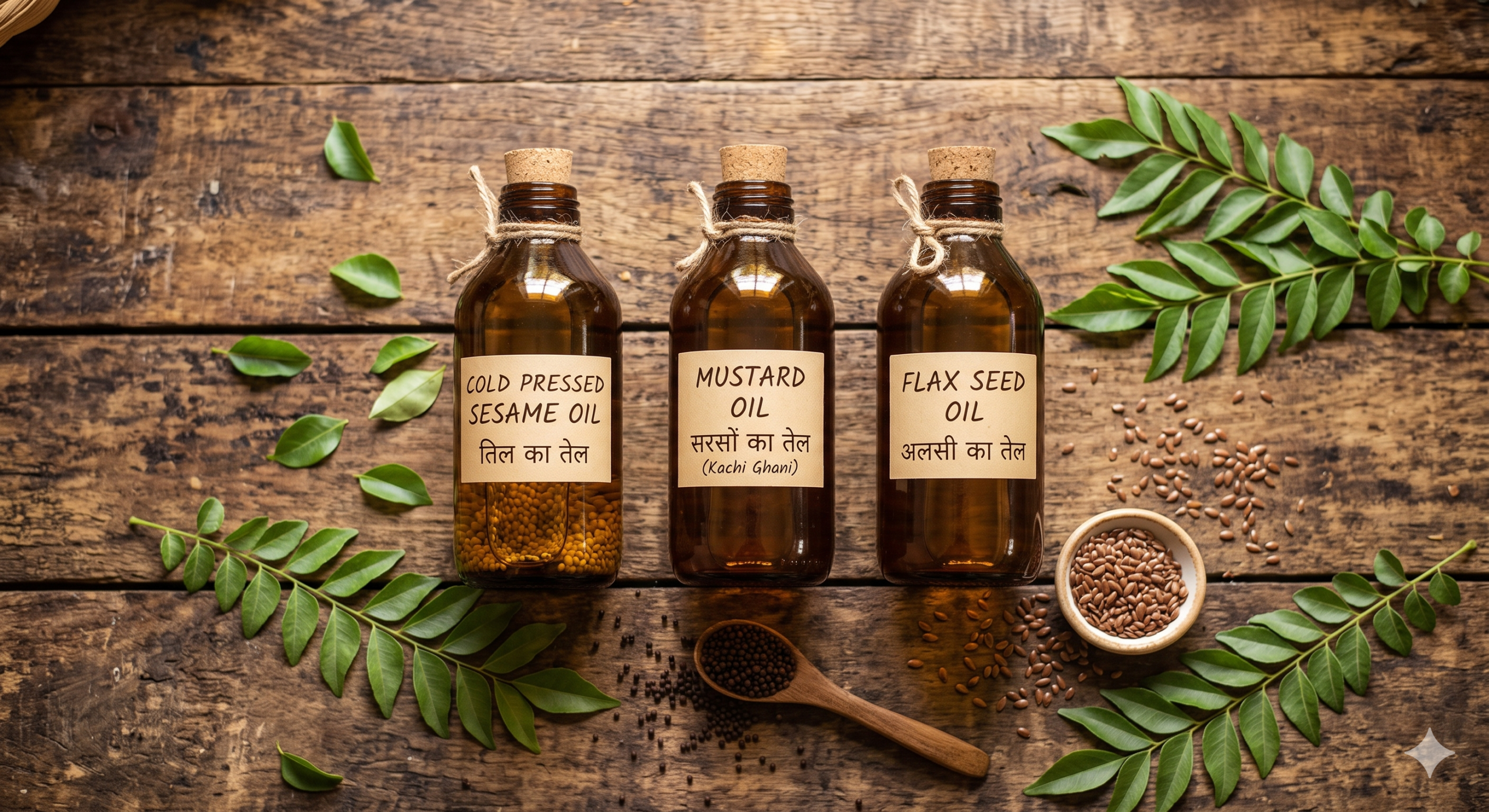
Mustard oil has a strong reputation in North and Central Indian cooking, and heart health is one of the main reasons. It has one of the best omega-6 to omega-3 ratios of any cooking oil — close to 2:1, which is near the ideal ratio for reducing cardiovascular inflammation. It is also high in monounsaturated fats and contains allyl isothiocyanate, which has natural cardioprotective properties. A large clinical trial — the MIMI study — found that patients who cooked with mustard oil had significantly lower rates of heart attack recurrence compared to those using sunflower oil. Use wood pressed mustard oil for daily cooking, tempering, and sabzi. The pungency mellows with heat.
2. Cold Pressed Sesame Oil
Sesame oil is one of the most studied oils for cardiovascular protection. A 2016 clinical study published on NCBI showed that regular sesame oil consumption reduced blood pressure and improved lipid profiles in hypertensive patients. It is rich in sesamol and sesamin—two antioxidants that reduce LDL oxidation, which is the key process that leads to arterial plaque. Cold pressed sesame oil retains all of these compounds because it skips the high-heat extraction that destroys them in refined versions. Use it for tempering dal, rasam, and chutneys. It handles medium heat well.
3. Cold Pressed Flax Seed Oil
If you want one oil that works specifically on your triglycerides and inflammation markers, flax seed oil is it. It is the richest plant source of ALA omega-3 fatty acids. A meta-analysis of multiple randomised trials confirmed that ALA supplementation significantly reduced total cholesterol and LDL levels. For Indian diets that are heavily omega-6 dominant—thanks to years of refined sunflower oil—adding cold pressed flax seed oil daily helps rebalance the ratio. Do not heat it. Add one teaspoon to your curd, raita, or salad every day. Consistent use over 8 to 12 weeks shows measurable changes in lipid panels.
4. Cold Pressed Groundnut Oil
Groundnut oil is the most familiar heart-friendly option for Telugu and South Indian households. It is high in monounsaturated fats — the same type found in olive oil — which are consistently linked to lower LDL and better HDL levels. It also contains resveratrol, a natural polyphenol with proven anti-inflammatory and cardioprotective effects. Cold pressed groundnut oil has a mild flavor and high smoke point, making it the most practical everyday swap from refined sunflower oil. It works for everything — frying, tempering, and everyday cooking.
5. Wood Pressed Coconut Oil
Coconut oil is controversial because of its high saturated fat content. But the type of saturated fat matters. Medium-chain fatty acids in coconut oil — especially lauric acid — raise HDL (good cholesterol) more than they raise LDL. Several population studies on Kerala and Sri Lankan communities, where coconut oil has always been the primary cooking fat, show lower rates of heart disease than comparable populations using refined oils. The key is using it in moderation. One to two teaspoons daily in cooking is well within a heart-safe range.
How to Use These Oils Daily — Practically
You do not need to use five oils at once. Here is a simple, practical rotation:
- Morning cooking — wood pressed coconut oil or cold pressed groundnut oil for breakfast items.
- Dal and sabzi tempering — wood pressed mustard oil or cold pressed sesame oil.
- Raw addition — one teaspoon of cold pressed flax seed oil in afternoon curd or raita.
- Total daily intake — 3 to 4 teaspoons of cooking oil per person. Do not add extra on top of your current use, just replace.
Consistency matters more than quantity. One month of this rotation will not transform your lipid panel. Three to six months consistently will.
What to Stop Using for Heart Health
Good oil habits work best when you also remove the damaging ones.
- Refined sunflower oil and palmolein—high omega-6, low in antioxidants, and inflammatory over time.
- Vanaspati or partially hydrogenated vegetable fat — still used in many Indian snacks and mithai. Trans fats directly damage arteries.
- Reused or reheated frying oil—oxidized oil is more harmful than refined oil. Change frying oil every use.
- Blended oils marketed as heart-healthy—most are still refined base oils with minimal cold pressed content.
A Word on Quantity
Even the healthiest oil causes problems in large amounts. Total fat intake for a healthy adult should stay around 20 to 35 percent of daily calories. For most Indians, 3 to 5 teaspoons of cooking oil per day covers that. The goal is not to eat more oil — it is to eat better oil in the same quantities you already use.
Conclusion
Heart disease in India is rising, but small lifestyle changes can make a big difference. Choosing the best cold pressed oils for heart health helps you replace highly refined oils with nutrient-rich alternatives. Whether you prefer wood pressed mustard oil, sesame oil, or flaxseed oil, using quality cold pressed oils as part of a balanced diet can support long-term cardiovascular wellness.
Explore Srikruti Naturals’ range of cold pressed oils to make healthier cooking a daily habit.