The best cold pressed oils for PCOS are flax seed oil (for insulin resistance and testosterone reduction), sesame oil (for oxidative stress), and coconut oil (for thyroid support and blood sugar stability). PCOS affects roughly 1 in 5 Indian women of reproductive age. It is one of the most searched women’s health topics in India right now — and rightfully so. The combination of irregular periods, hormonal acne, weight gain, and insulin resistance makes it one of the more frustrating conditions to manage. Medication helps. But diet makes a real difference too. And one of the most practical daily diet changes you can make is switching your cooking oil. Cold pressed oil for PCOS does not cure the condition — but it consistently reduces the inflammation and insulin resistance that drive most PCOS symptoms.
Why Cooking Oil Matters for PCOS
PCOS is driven by two core problems: hormonal imbalance and chronic low-grade inflammation. Both are directly influenced by the type of fat you consume daily. Refined oils — sunflower, palmolein, soybean — are high in omega-6 fatty acids and processed with chemicals that promote inflammation. When your body is already inflamed from PCOS, adding more inflammatory fat every day makes symptoms worse over time.
Cold pressed and wood pressed oils vs refined oil retain their natural omega-3 fatty acids, antioxidants, and anti-inflammatory compounds. These directly work against the two core drivers of PCOS — inflammation and insulin resistance. Switching oils does not replace your PCOS medication or treatment plan. But it removes one daily source of harm and adds daily nutritional support. For a condition that requires long-term management, that consistency matters.

How PCOS and Inflammation Are Connected
Most women with PCOS have elevated markers of chronic inflammation — higher CRP, higher oxidative stress, higher androgen levels. This inflammation disrupts ovulation, worsens insulin resistance, and drives the skin and hair symptoms that come with PCOS. The fatty acids in refined oils feed this cycle. Omega-3 fatty acids in cold pressed oils break it.
Insulin resistance is the other major player. When cells stop responding to insulin efficiently, the body produces more insulin — which triggers the ovaries to produce more testosterone. That excess testosterone is what causes the irregular periods, acne, and unwanted hair growth that define PCOS. Reducing insulin resistance through diet — including fat quality — is one of the most evidence-backed approaches to managing PCOS symptoms naturally.
Quick Reference: Best Cold Pressed Oils for PCOS
| Oil | PCOS Benefit | How to Use |
| Cold Pressed Flax Seed Oil | Reduces insulin resistance, lowers testosterone, anti-inflammatory | 1 tsp raw in curd or salad daily — do not heat |
| Cold Pressed Sesame Oil | Antioxidants reduce oxidative stress, supports liver detox | Cooking tempering, dal, rasam — medium heat |
| Cold Pressed Groundnut Oil | Monounsaturated fat supports insulin sensitivity | Daily cooking oil — replaces refined sunflower |
| Wood Pressed Coconut Oil | MCTs support thyroid, stable blood sugar, anti-inflammatory | Breakfast cooking, 1–2 tsp daily in cooking |
| Wood Pressed Mustard Oil | Omega-3 ratio supports hormone production, reduces acne | Tempering, sabzi — 1 tsp per meal |
5 Best Cold Pressed Oils for PCOS — What Each One Does
1. Cold Pressed Flax Seed Oil — The Most Evidence-Backed Choice
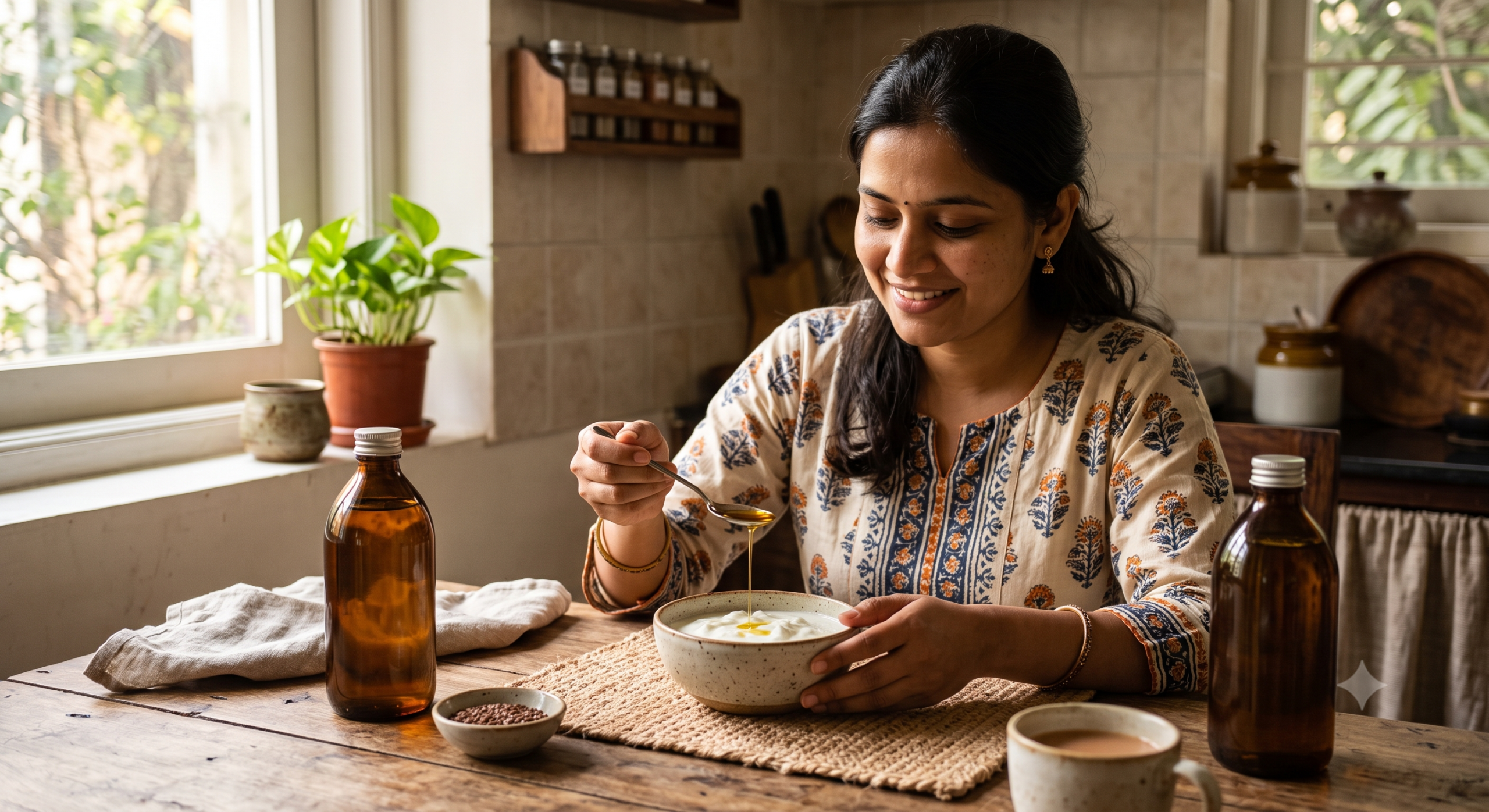
Flax seed oil has the strongest clinical evidence of any oil for PCOS management. A randomised double-blind placebo-controlled trial published on PubMed found that flaxseed oil omega-3 supplementation in women with PCOS for 12 weeks significantly reduced insulin resistance, lowered serum triglycerides, decreased VLDL cholesterol, and reduced hs-CRP — a key inflammation marker. A separate 2025 clinical trial on NCBI found that flaxseed supplementation in PCOS patients lowered free testosterone and improved SHBG levels — the hormone that keeps testosterone in check. Cold pressed flax seed oil is the richest plant source of ALA omega-3 and also contains lignans — phytoestrogens that help balance oestrogen levels. Do not heat it. Add one teaspoon to your curd, raita, or buttermilk daily. Results take 8 to 12 weeks of consistent use.
2. Cold Pressed Sesame Oil — For Oxidative Stress and Liver Health
Women with PCOS have significantly higher oxidative stress than women without it. Oxidative stress damages cells, worsens insulin resistance, and disrupts hormone signalling. Cold pressed sesame oil is rich in sesamol and sesamin — two potent antioxidants that reduce oxidative stress markers. Sesame oil also supports liver function. The liver is responsible for clearing excess oestrogen and testosterone from the blood. A sluggish liver means hormones build up — which worsens PCOS symptoms. Including sesame oil in daily cooking supports the liver’s detox pathway alongside its antioxidant benefits. Use it for tempering dal, rasam, sambar, and chutneys. It handles medium heat well.
3. Wood Pressed Coconut Oil — For Thyroid and Blood Sugar
Many women with PCOS also have sluggish thyroid function — not diagnosed as hypothyroidism, but a mild suppression that slows metabolism and contributes to weight gain. Coconut oil’s medium-chain triglycerides (MCTs) are one of the few dietary fats that directly support thyroid hormone production and speed up metabolism. Coconut oil also has a low glycaemic impact — it does not spike blood sugar, and it slows down digestion of carbohydrates when used in cooking, which reduces the insulin surge that drives PCOS symptoms. Use wood pressed coconut oil for breakfast cooking — eggs, upma, poha, dosas. One to two teaspoons daily is enough.
4. Cold Pressed Groundnut Oil — For Everyday Cooking
Most PCOS dietary advice focuses on what to avoid. Cold pressed groundnut oil is one of the simplest things to add. It is high in monounsaturated fats — the same type found in olive oil — which consistently improve insulin sensitivity in clinical studies. It has a high smoke point, mild flavour, and handles all Indian cooking methods well. For women with PCOS who need a practical everyday oil that improves insulin response without changing how food tastes, cold pressed groundnut oil is the most realistic daily switch from refined sunflower oil.
5. Wood Pressed Mustard Oil — For Hormonal Acne and Inflammation
Hormonal acne is one of the most distressing symptoms of PCOS — and it is driven by the same inflammation and androgen excess that causes other symptoms. Wood pressed mustard oil has one of the best omega-3 to omega-6 ratios of any Indian cooking oil, which reduces the chronic inflammation that feeds androgen-driven acne. It also contains allyl isothiocyanate, which has anti-inflammatory properties. Many women with PCOS who switch to mustard oil for daily cooking report visible improvement in acne flares within a few months — not from the oil alone, but as part of an overall reduction in dietary inflammation.
How to Add Cold Pressed Oils to Your Daily PCOS Diet
Consistency matters more than quantity. One tablespoon of flax seed oil on a good day and refined sunflower oil the rest of the week will not move the needle. Here is a practical daily routine:
- Morning — one teaspoon of cold pressed flax seed oil added raw to your breakfast curd or buttermilk.
- Breakfast cooking — wood pressed coconut oil for upma, eggs, or dosas.
- Lunch and dinner tempering — cold pressed sesame oil for dal and rasam.
- Main cooking — cold pressed groundnut oil for sabzi, curries, and frying.
- Total oil — 3 to 4 teaspoons per day. Replace your current refined oil, do not add on top of it.
Give this routine 8 to 12 weeks before evaluating results. Hormonal changes take time — insulin resistance does not reverse in two weeks.
What to Stop Using if You Have PCOS
- Refined sunflower oil — high omega-6, pro-inflammatory, worsens insulin resistance with daily use.
- Refined palmolein or palm oil — commonly used in processed foods and restaurant cooking, highly inflammatory.
- Hydrogenated vegetable fat (vanaspati) — trans fats directly worsen insulin resistance and hormonal balance.
- Soybean oil — very high omega-6 content, and phytoestrogens in processed soy can further disrupt hormonal balance.
Oils vs Other PCOS Lifestyle Changes — Realistic Expectations
Cold-pressed oils are not a PCOS treatment. They are a dietary support tool. The evidence is clear that omega-3 fatty acids, natural antioxidants, and healthy fat ratios reduce the inflammation and insulin resistance that drive PCOS symptoms. But they work alongside — not instead of — medication, exercise, sleep, and stress management. Think of switching to cold pressed oil as removing one daily source of harm and replacing it with one daily source of support. Over months, that adds up.
Conclusion
PCOS is a long-term condition that responds to long-term habits. Switching your cooking oil is one of the smallest, most sustainable changes you can make — and the evidence behind cold pressed oil for PCOS support is genuinely there. Start with cold pressed flax seed oil in your morning curd. Switch tempering to cold pressed sesame oil. Use groundnut oil for daily cooking. Give it three months. These are not dramatic changes — but for a condition that requires daily management, small consistent habits are exactly what makes the difference.
Browse Srikruti Naturals’ full range of cold pressed and wood pressed oils to build your daily PCOS-supportive kitchen routine.
FREQUENTLY ASKED QUESTIONS
Q: Which cold-pressed oil is best for PCOS?
Cold-pressed flax seed oil has the strongest clinical evidence for PCOS — it reduces insulin resistance, lowers free testosterone, and decreases inflammation markers. Cold pressed sesame oil reduces oxidative stress. Cold-pressed coconut oil supports thyroid function and blood sugar stability. Using all three in rotation gives the most comprehensive hormonal support.
Q: Can cold pressed oil help with PCOS weight gain?
Cold-pressed oils support PCOS weight management indirectly by reducing insulin resistance — which is the main driver of weight gain in PCOS. Flax seed oil and coconut oil both improve insulin sensitivity markers in clinical studies. They are not a weight loss tool on their own, but replacing refined oils that worsen insulin resistance with cold-pressed options supports the metabolic improvements that make weight management easier.
Q: How much flax seed oil should I take daily for PCOS?
One teaspoon (approximately 5ml) of cold pressed flax seed oil daily is the standard amount used in PCOS clinical studies. Add it raw to your morning curd, raita, or buttermilk — do not heat it. Clinical trials used 1000mg omega-3 supplementation twice daily, which is equivalent to roughly one teaspoon of flax seed oil. Results take 8 to 12 weeks of consistent use.
Q: Is sesame oil good for PCOS?
Yes. Cold pressed sesame oil is particularly useful for the oxidative stress component of PCOS. It is rich in sesamol and sesamin — antioxidants that reduce cellular damage from chronic inflammation. It also supports liver function, which is important for hormone clearance. Use it for daily tempering in dal and rasam. It is not the most evidence-backed oil for insulin resistance specifically — that is flax seed oil — but it complements it well in cooking.
Q: Can I use coconut oil for PCOS?
Yes. Wood pressed coconut oil supports two common issues in PCOS — sluggish thyroid function and blood sugar instability. Its medium-chain triglycerides support thyroid hormone production and do not spike blood sugar. It is particularly useful for breakfast cooking. Use one to two teaspoons daily in cooking. Avoid refined coconut oil — only cold pressed or wood pressed versions retain the active MCT profile.
Q: Which oil should I avoid if I have PCOS?
Avoid refined sunflower oil, palmolein, and soybean oil for daily cooking — these are high in omega-6 fatty acids and pro-inflammatory compounds that worsen insulin resistance and hormonal imbalance. Also avoid vanaspati or any partially hydrogenated vegetable fat, which contains trans fats that directly disrupt hormone function.
Q: How long does it take for cold-pressed oil to show results for PCOS?
Clinical studies on flaxseed oil and PCOS used 12-week intervention periods and saw significant results in insulin resistance, inflammation markers, and testosterone levels. For dietary oil changes to show meaningful hormonal impact, expect 8 to 12 weeks of consistent daily use. Skin improvements from reduced inflammation may appear earlier — around 4 to 6 weeks for some women.