
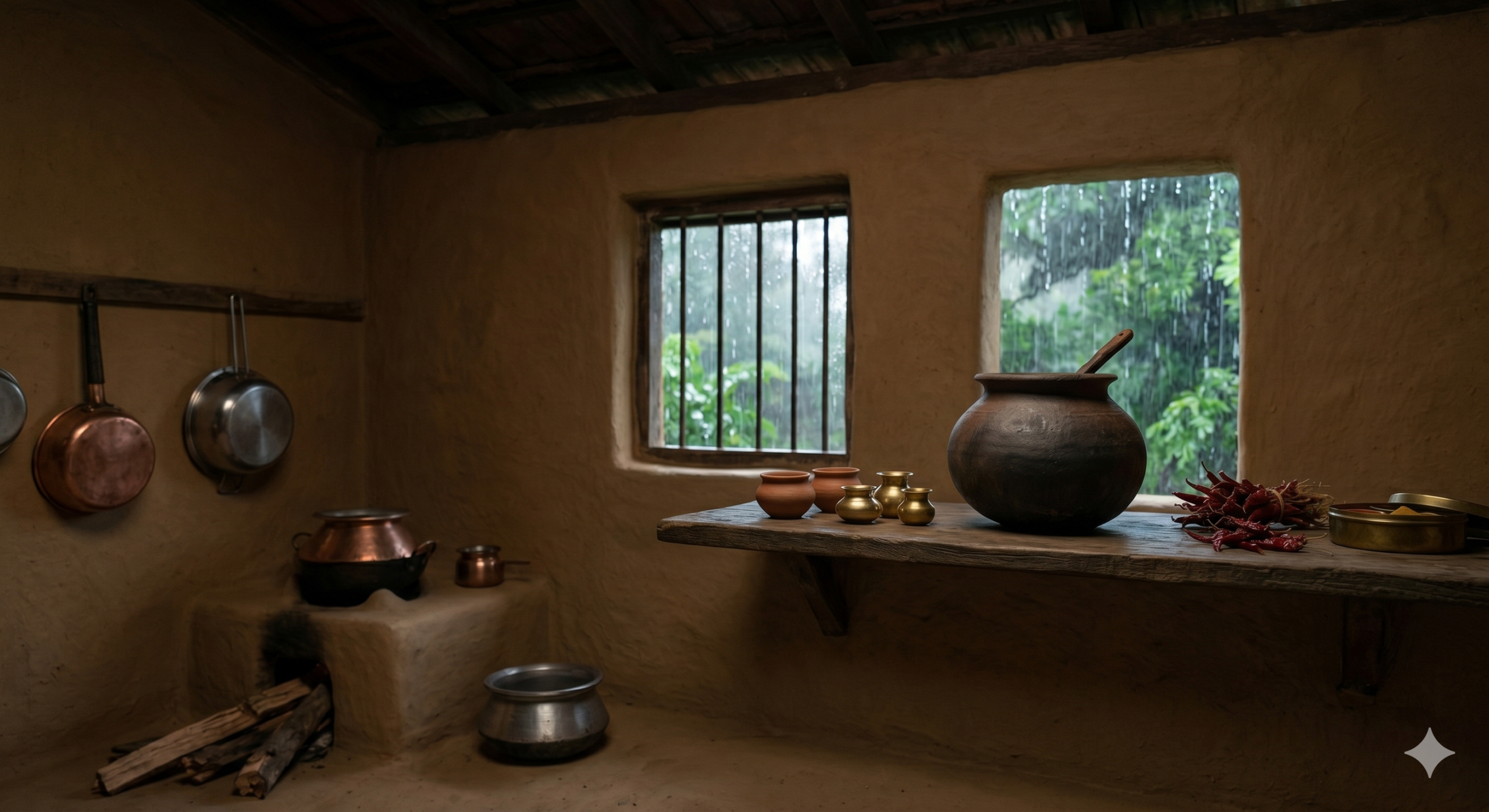
Your kitchen smells different in June. The first rains hit, the humidity shoots up, and suddenly your body feels heavier. Digestion slows. Colds appear from nowhere. If you’ve been cooking with refined oil, monsoon is probably making things worse. Choosing best wood pressed oil for monsoon is not a wellness trend — it’s a practical decision your grandmother already knew. She used what was in the clay pot: sesame for tadka, groundnut for frying, mustard for pickles. There was logic to it. This blog breaks down exactly which oils to use this season and why.
Why Monsoon Demands a Different Oil Strategy
In monsoon, two things happen to your body simultaneously: immunity dips and digestion weakens. The humidity slows gut motility. Microbial growth in food and water increases. The body needs oils that actively support these two functions — not oils that are just neutral carriers of fat.
Refined oils are stripped of everything during hexane extraction and high-heat processing. What’s left is essentially fat with no functional benefit. Wood pressed oils, extracted without chemicals or excessive heat, keep the active compounds intact. That’s what makes the difference in a season like this.

The Best Wood Pressed Oils for Monsoon — Oil by Oil
1. Wood Pressed Mustard Oil — Your Monsoon Workhorse
If you’re cooking in a South Indian home, mustard oil might not be your daily go-to. But during monsoon, it deserves a place in your kitchen regardless of region.
Mustard oil contains allyl isothiocyanate — a natural compound with strong antimicrobial and antifungal properties. In a season where food spoils faster and infections spread easily, this is exactly what you want in your cooking medium. It also stimulates digestive enzymes and improves appetite, which tends to drop when the weather is damp.
Use it for tadka, frying bhajias or pakoras, tempering dals, and making monsoon pickles. The pungency that puts some people off is actually the therapeutic compound working. Wood pressed mustard oil has a sharper, more authentic aroma than the refined version — that’s a sign the allyl isothiocyanate is still present.
2. Wood Pressed Groundnut Oil — The Everyday Monsoon Oil
Groundnut oil is the most practical monsoon oil for South Indian, Maharashtrian, and Gujarati kitchens. It has a high smoke point (around 230°C), handles deep frying beautifully, and is naturally rich in resveratrol — an antioxidant that supports immune function.
The monounsaturated fat content in groundnut oil makes it more stable than polyunsaturated oils in humid conditions. It doesn’t oxidise quickly. For a season where you’re making more fried comfort foods — onion pakoras, mirchi bajji, poha, upma — groundnut oil gives you both flavour and stability.
Wood pressed groundnut oil has a distinct nuttiness that the refined version completely lacks. Once you cook with it, going back feels like a downgrade.
3. Wood Pressed Sesame Oil — For Digestion and Warmth
Sesame oil is a traditional monsoon and winter oil across South India. In Telugu and Tamil kitchens, it’s non-negotiable for certain dishes — and rightfully so.
It contains sesamol and sesamin, two antioxidants that give the oil exceptional oxidative stability even in humid conditions. It has natural warming properties that counter the cold dampness of the season. Regular consumption supports gut health, liver function, and circulation.
Use wood pressed sesame oil for curry bases, stir-frying greens, making chutneys, or tempering rice dishes. It also works brilliantly for the occasional oil massage during monsoon to keep skin nourished when humidity plays havoc with it.
4. Wood Pressed Coconut Oil — For Light Cooking and Immunity
Coconut oil tends to get recommended more for summer, but it has a strong role in monsoon cooking too — especially for lighter meals, chutneys, and quick stir-fries.
Its lauric acid content converts to monolaurin in the body, which has proven antimicrobial properties. Given how many monsoon illnesses are microbial — gut infections, colds, fungal issues — this matters. Coconut oil also digests quickly, which suits the sluggish digestion typical of rainy days.
Use it for light sautéing, coconut-based chutneys, coconut rice, and stir-fried vegetables. It pairs naturally with South Indian cooking and doesn’t feel heavy on the stomach.
Quick Comparison: Wood Pressed Oils for Monsoon
| Oil | Key Benefit | Best Used For | Monsoon Superpower |
| Mustard Oil | Antimicrobial, digestive | Tadka, frying, pickles | Fights monsoon infections |
| Groundnut Oil | High smoke point, immune support | Deep frying, snacks, curries | Stable in heat & humidity |
| Sesame Oil | Antioxidant-rich, warming | Curries, tempering, massage | Gut health + warmth |
| Coconut Oil | Lauric acid, light digestion | Light stir-fry, chutneys | Natural antimicrobial |
What to Avoid During Monsoon
Not every oil suits every season. A few to be cautious about:
- Refined sunflower and soybean oils — high in polyunsaturated fats that oxidise quickly in humidity, producing inflammatory compounds
- Reusing oil multiple times — a common kitchen habit that’s especially harmful in monsoon when oil degrades faster
- Light olive oil for Indian high-heat cooking — low smoke point leads to breakdown and bitterness
How to Store Wood Pressed Oils in Monsoon
Good oil can go bad fast if stored poorly — and monsoon is the worst season for improper storage. Humidity and temperature swings accelerate oxidation.
- Store in a dark, cool place away from the stove — not next to it
- Use dark glass or food-grade tin containers rather than clear plastic
- Always close the lid tightly after use
- Buy in quantities you’ll use within 2–3 months — freshness matters more than buying in bulk
- If the oil smells rancid or tastes bitter, discard it
At Srikruti Naturals, we press our oils in small batches using a traditional wooden ghani — no heat, no chemicals, no shortcuts. Every bottle of our wood pressed oil is pressed to order so you get it fresh. That freshness is especially important in monsoon when oil stability directly affects your family’s health. We’ve seen customers switch during the rainy season and not go back. That’s the difference you can taste.
The Simple Monsoon Oil Rotation
You don’t need to overthink this. A simple three-oil rotation covers most of your monsoon cooking needs:
- Groundnut oil — daily cooking, frying, curries
- Sesame oil — tempering, chutneys, light dishes
- Mustard oil — pickles, pakoras, strong-flavoured dishes
Keep coconut oil for lighter cooking days or when someone at home is feeling under the weather.
Seasonal eating isn’t just about vegetables and fruits. The oil you cook in matters just as much. Your body processes fat at every meal — give it fat that’s working with you, not against you.
Ready to Switch to Wood Pressed Oils This Monsoon?
Srikruti Naturals’ wood pressed groundnut, sesame, mustard, and coconut oils are available on our website and via WhatsApp order. Fresh pressed, no additives, no compromise.
Order now at srikrutinaturals.com or WhatsApp us directly to know this week’s availability.
Your kitchen deserves better oil. Your family deserves better health. This monsoon, make the switch.