
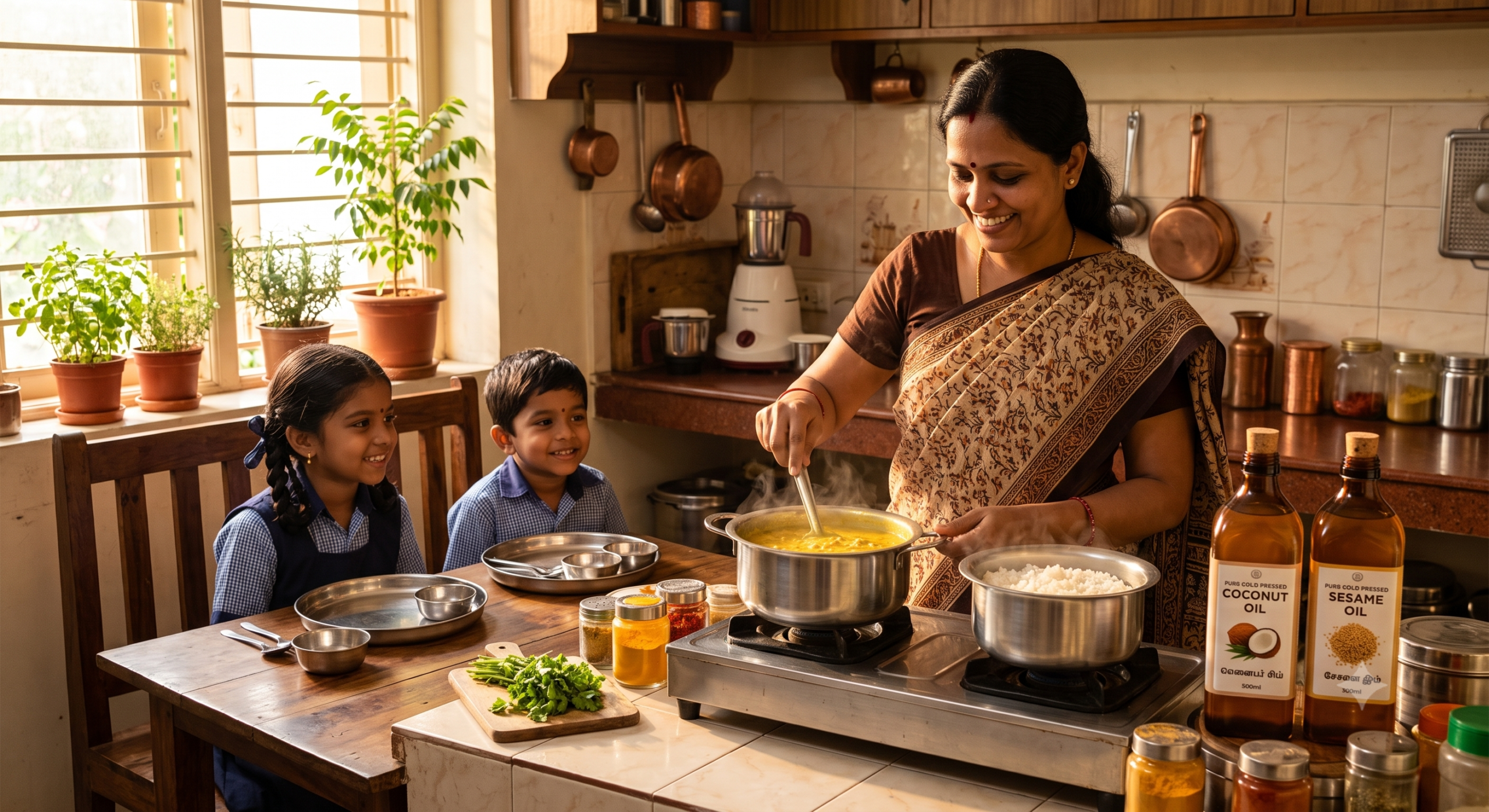
Most Indian parents spend a lot of energy thinking about what their children eat. Fruits, vegetables, proteins, calcium. But the cooking oil gets picked up almost automatically at the grocery store — usually whatever is on offer or whatever has been used for years. That one habit quietly affects your child’s brain development, bone strength, skin health, and how often they fall sick. Cold pressed oil for kids is not something your child needs to eat separately or notice at all. It is the same dal, the same sabzi, the same rice — just cooked with an oil that actually does something for their growing body.
What a Growing Child’s Body Actually Needs from Fat
Fat is not the enemy for children — it is a building block. Between ages 1 and 12, fat is required for three specific things that nothing else can replace.
First, the brain. Nearly 60 percent of the brain is made of fat. The omega-3 fatty acids in certain cold pressed oils are directly used to build neural pathways. A study on omega-3 and children’s cognitive development confirmed that adequate omega-3 intake in early childhood affects focus, memory, and learning ability long-term.
Second, immunity. Fat-soluble vitamins — especially vitamin E — travel through dietary fat and support immune cell production. A clinical review on vitamin E and child immunity found that vitamin E deficiency directly reduces the effectiveness of immune response in children. Cold pressed oils retain vitamin E. Refined oils lose most of it during high-heat processing.
Third, bone development. Calcium absorption depends on fat-soluble vitamins. Without enough healthy fat in the diet, calcium from milk and curds does not absorb properly. This is why children who eat low-fat diets sometimes still develop weak bones despite drinking milk every day.
Why Refined Oil Falls Short for Children
Refined sunflower or palmolein oil does one job — it carries heat and flavor from the pan to the food. That is it. The high-heat chemical extraction process destroys vitamin E, removes natural antioxidants, and damages the fatty acid structure. For adults, this is a problem over time. For children in their critical growth years, it is a missed opportunity every single day.
Cold pressed and wood pressed oils skip that harsh process. The seed is pressed slowly at low temperature, and the oil comes out with its original nutrients intact—the same fatty acids, the same vitamin E, the same antioxidants that were there in the seed. This is the only real difference, but for a 5-year-old eating three meals a day, it adds up to something significant over months and years.
Which Cold Pressed Oils Work Best for Kids — and Why
Cold Pressed Coconut Oil — The Toddler-Friendly Starting Point
For children under 5 especially, cold pressed coconut oil is the easiest and most stomach-friendly option. Its medium-chain fatty acids digest faster than other fats — meaning even toddlers with sensitive stomachs handle it well. It does not add a strong flavour to food, so picky eaters rarely notice. Beyond digestion ease, coconut oil’s lauric acid converts to monolaurin in the body, which has natural antibacterial properties — useful for young children whose immune systems are still learning. Use it for upma, poha, dosas, eggs, and roti making. It handles everyday cooking without problems.
Cold Pressed Sesame Oil — The Bone and Skin Oil
Sesame oil is the one cold pressed oil that has been part of South Indian and Telugu children’s diets for generations — in cooking, in massage, in hair care. The reason it has lasted this long is simple: it works. Cold pressed sesame oil is one of the few cooking oils with a meaningful amount of calcium and zinc — two minerals directly tied to bone density and growth in children. Its natural vitamin E content also supports skin health, which matters for children who deal with dry skin or mild eczema. In the kitchen, use it for tempering dal, sambar, and rice dishes. The nutty flavour is something most South Indian children recognise from childhood and do not resist.
Cold Pressed Groundnut Oil — The Everyday Workhorse
If you want one oil that handles everything — frying, sauteing, tempering — without changing how food tastes, cold pressed groundnut oil is the right pick for a family kitchen. It has a high smoke point, a mild flavour that children accept easily, and is rich in monounsaturated fats that support healthy cholesterol levels from childhood. It also contains resveratrol, a natural antioxidant with anti-inflammatory properties. For most Telugu households, this is the closest cold pressed equivalent to refined sunflower oil in terms of usage — same applications, much better nutrition. One note: skip this if your child has a peanut allergy.
How to Introduce Cold Pressed Oil Without Your Child Noticing
Children do not need to know you switched oils. Just switch.
- Replace your current cooking oil bottle with cold pressed groundnut oil. Use it exactly the same way — frying, tempering, sauteing. Flavour difference is minimal.
- For dal and sambar tempering, switch to cold pressed sesame oil. Most South Indian children already know this flavour from childhood — no resistance.
- For breakfast — upma, poha, eggs, dosas — use cold pressed coconut oil. Mild flavour, light on the stomach, works well at medium heat.
- Do not add multiple oils at once. Pick one, use it for two weeks, then add a second. Slow transitions work better with picky eaters.
Age-Wise Oil Guide for Indian Parents
6 months to 2 years
cold pressed oil for kids under 2 years starts best with coconut oil. It is easy to digest, mild in flavour, and gentle on developing stomachs. Always check with your paediatrician before introducing any new food oil at this age.
2 to 6 years
Coconut oil for breakfast cooking, sesame oil for dal and sabzi tempering. This age group builds bone density fastest — sesame oil’s calcium and zinc content matters here specifically.
6 to 12 years
All three oils can rotate based on meal type. Groundnut oil handles school lunch box cooking well. Sesame oil works for dinner tempering. Coconut oil for weekend breakfast. This age group is also in peak brain development — consistent omega-rich fat daily makes a real difference in focus and memory.
One Habit That Makes the Biggest Difference
The single most impactful thing you can do is to stop reheating and reusing cooking oil. Many Indian kitchens reuse frying oil two or three times. Reheated oil oxidises and creates compounds that are harsh on children’s young digestive systems and liver. Even the best cold pressed oil becomes harmful when reheated repeatedly. Change frying oil every use — and keep total daily cooking oil to 2 to 3 teaspoons per child per day.
What to Stop Buying
- Refined sunflower oil — the most common choice in Indian homes, and the least useful for growing children.
- Blended cooking oils marketed as healthy — usually 80 to 90 percent refined base oil with a small fraction of cold pressed oil for the label.
- Vanaspati or dalda in any form — trans fats that affect cardiovascular health from a young age.
Conclusion
Children do not need supplements to grow well — the right cold pressed oil for kids is enough of a daily foundation. Cold pressed oil for kids is not an upgrade — it is a return to what Indian kitchens used before refined oil became cheap and convenient. Start with one bottle of cold pressed coconut or groundnut oil this week. Switch your tempering to sesame oil. Keep it consistent. The results — fewer seasonal illnesses, better focus, stronger bones — are not visible in a week. But give it three months and most parents notice the difference without being told what changed.
Browse Srikruti Naturals’ full range of cold pressed and wood pressed oils, made the traditional way with no chemicals and no compromise.