High cholesterol is one of the most common health concerns in Indian households today. The cooking oil you use every day plays a direct role in managing it. Wood pressed oil for cholesterol control is not a new idea — our grandparents cooked with chekku-extracted oils for generations and rarely dealt with the lifestyle diseases we see today. In this guide, you will learn which wood pressed oils actually help manage cholesterol, how they work, and how to use them correctly for heart health.
Why Your Cooking Oil Directly Affects Cholesterol Levels
Cholesterol levels in the body are heavily influenced by the type of fats you consume daily. Refined oils — processed with high heat and chemical solvents — are stripped of their natural antioxidants and phytosterols. These are the very compounds that prevent LDL (bad) cholesterol from oxidising and blocking arteries.
Wood pressed oils retain all these protective compounds. The cold extraction process keeps phytosterols, Vitamin E, and healthy fatty acids (MUFA and PUFA) intact. This is why switching from refined to wood pressed oils is one of the most impactful dietary changes you can make for heart health.
Refined Oil vs Wood Pressed Oil: The Cholesterol Impact
- Refined oil: High in trans fats from partial hydrogenation — raises LDL, lowers HDL
- Wood pressed oil: Rich in MUFA, PUFA, and phytosterols — lowers LDL, supports HDL
- Refined oil: Antioxidants destroyed during bleaching and deodorising
- Wood pressed oil: Vitamin E and polyphenols preserved — prevent cholesterol oxidation
- Refined oil: Chemical residues (hexane) possible — promotes inflammation
- Wood pressed oil: 100% chemical-free — reduces systemic inflammation
Best Wood Pressed Oils for Cholesterol Control in India
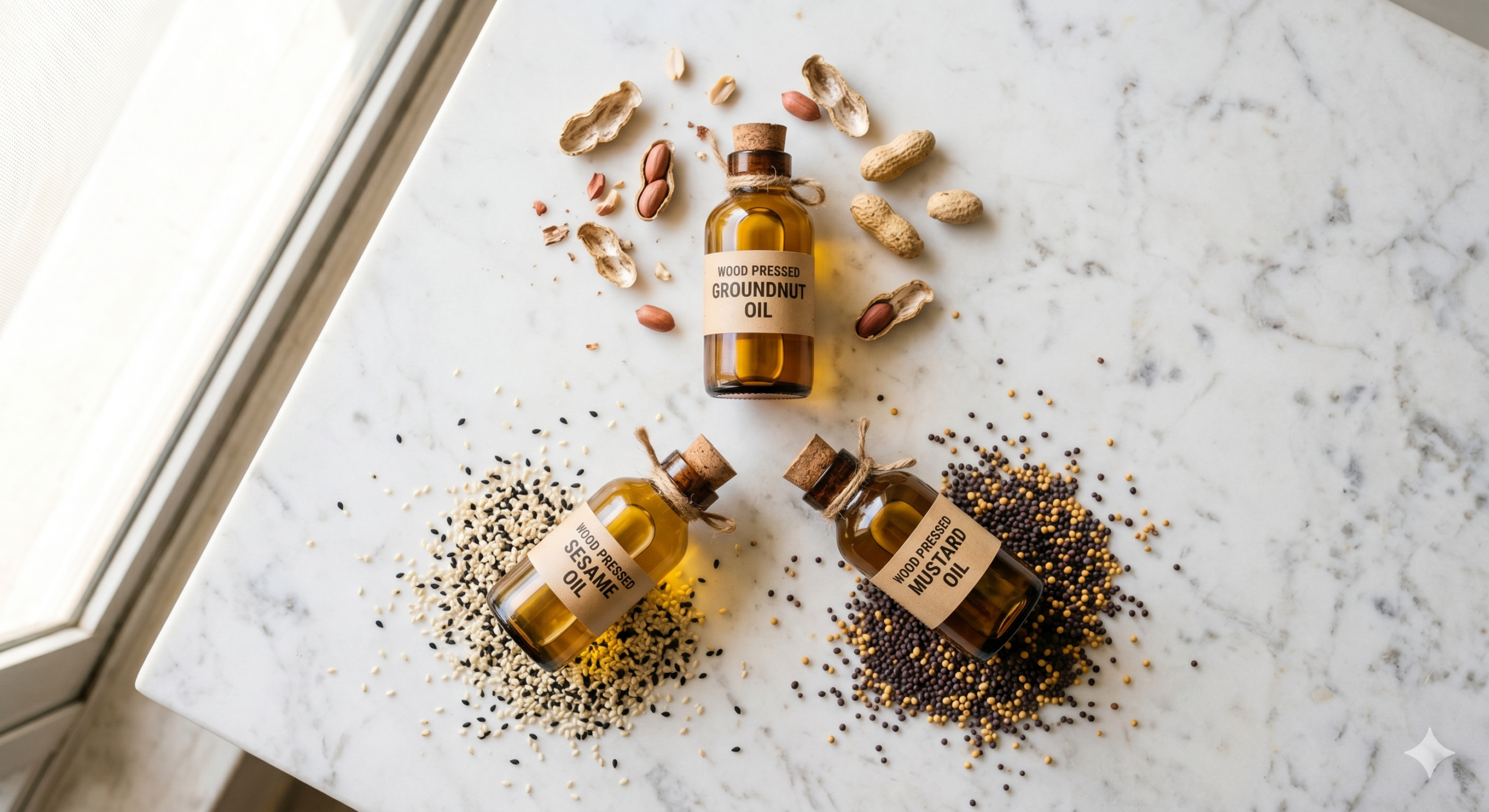
Not all oils are equal when it comes to cholesterol management. Here are the top wood pressed oils that are backed by nutritional science and traditional use:
1. Wood Pressed Groundnut Oil — Best for LDL Reduction
Wood pressed groundnut oil is one of the richest sources of plant sterols (phytosterols) among Indian cooking oils. Phytosterols are structurally similar to cholesterol — they compete for absorption in the intestine and block LDL from entering the bloodstream.
- High in MUFA (oleic acid) — same heart-healthy fat found in olive oil
- Rich in phytosterols — clinically proven to reduce LDL cholesterol by 5–15%
- Resveratrol content — antioxidant that prevents arterial plaque formation
- High smoke point (~190°C) — stable for everyday Indian cooking
Best for: Daily cooking, tempering, and frying. Explore Srikruti Naturals wood pressed groundnut oil.
2. Wood Pressed Sesame Oil — Best for Triglyceride Control
Wood pressed sesame oil contains two unique antioxidants — sesamin and sesamol — that are found in almost no other food source. These lignans actively reduce triglyceride levels and prevent LDL oxidation, which is the first step in arterial plaque formation.
- Sesamin and sesamol — lower total cholesterol and triglycerides
- Balanced MUFA + PUFA — supports healthy lipid profile
- Linoleic acid (omega-6) — reduces LDL without affecting HDL
- Natural anti-inflammatory — reduces CRP levels linked to heart disease
Best for: Medium-heat cooking, tempering dals, and rice dishes. See our wood pressed sesame oil for details.
3. Wood Pressed Mustard Oil — Best for HDL (Good Cholesterol) Boost
Mustard oil has one of the best omega-3 to omega-6 ratios among Indian cooking oils. This balance is critical — most Indians consume too much omega-6 (from refined oils) and too little omega-3, which promotes inflammation and worsens cholesterol profiles.
- Alpha-linolenic acid (omega-3) — reduces LDL and inflammation simultaneously
- Erucic acid + glucosinolates — stimulate HDL production in the liver
- Allyl isothiocyanate — natural compound that improves blood circulation
- Best omega ratio among Indian oils — 1:2 (omega-3 to omega-6) vs refined oils at 1:15+
Best for: North and East Indian cooking, pickles, and marinades. Use cold (unheated) for maximum cholesterol benefit.
4. Cold Pressed Flaxseed Oil — Best Omega-3 Source for Vegetarians
If you are vegetarian or vegan and cannot get omega-3 from fish, cold pressed flaxseed oil is your best option. It contains the highest concentration of alpha-linolenic acid (ALA) among plant-based oils — directly linked to lower LDL and triglyceride levels.
- 57% ALA (omega-3) — highest in any plant oil
- Lowers triglycerides by up to 28% with regular use (1 tsp/day)
- Reduces arterial stiffness — improves blood pressure and circulation
- Do not heat flaxseed oil — use only as a salad dressing or post-cooking drizzle
How to Use Wood Pressed Oils for Maximum Cholesterol Benefit
The right oil used the wrong way gives limited results. Follow these guidelines to get the full cholesterol-lowering benefit from wood pressed oils:
Daily Cooking Rotation (Recommended)
- Morning: Use wood pressed groundnut oil for breakfast cooking (poha, upma, eggs)
- Afternoon: Use wood pressed sesame oil for tempering dals and rice dishes
- Evening: Use wood pressed mustard oil for vegetables and sabzis
- Raw use: Add 1 tsp cold pressed flaxseed oil to salads or smoothies daily
Quantity: How Much Oil Per Day?
The Indian Council of Medical Research (ICMR) recommends 25–30 ml of visible fat (cooking oil) per day for adults. This equals roughly 5–6 teaspoons. Using wood pressed oils within this limit while reducing refined oils gives the best cholesterol outcome.
What to Avoid
- Do not reuse or reheat wood pressed oils — reheating creates harmful free radicals
- Do not exceed the daily recommended quantity — even healthy oils raise calories
- Avoid mixing wood pressed and refined oils in the same pan
- Do not use flaxseed oil for cooking — its omega-3s break down under heat
How Long Does It Take to See Cholesterol Results?
Switching to wood pressed oils is not a medicine — it is a dietary correction. Results depend on your overall diet, activity level, and existing cholesterol numbers. Here is a realistic timeline:
- Week 1–2: Digestion improves. Bloating and acidity from refined oils reduces.
- Month 1: Mild improvement in triglyceride levels if diet is otherwise clean.
- Month 2–3: Noticeable reduction in LDL cholesterol with consistent use.
- Month 4–6: HDL levels improve, especially with mustard and flaxseed oil inclusion.
Important: If you have diagnosed high cholesterol or are on medication, do not stop treatment without consulting your doctor. Wood pressed oils support cholesterol management as part of a healthy diet — they are not a standalone cure.
FAQs: Wood Pressed Oil for Cholesterol
Which wood pressed oil is best for high cholesterol?
Wood pressed groundnut oil is the best all-round choice for high LDL cholesterol due to its high phytosterol content. For triglycerides, wood pressed sesame oil works best. For boosting HDL, mustard oil is most effective.
Is wood pressed oil better than olive oil for cholesterol?
For Indian cooking, yes. Olive oil has a low smoke point and is expensive for daily use. Wood pressed groundnut oil has comparable MUFA levels to olive oil, a higher smoke point, and is far more suitable for Indian cooking temperatures. It is also significantly more affordable.
Can I use wood pressed oil if I already have heart disease?
Wood pressed oils are generally considered heart-friendly, but always consult your cardiologist before making dietary changes if you have an existing heart condition. The oils themselves are beneficial, but quantity and overall diet context matter greatly.
Why did my grandparents have better cholesterol despite eating ghee and oils?
Traditional Indian diets used wood pressed or hand-churned oils, ghee from grass-fed cows, and whole foods — all minimally processed. Modern refined oils, ultra-processed foods, and sedentary lifestyles are the primary drivers of today’s cholesterol epidemic. Going back to wood pressed oils is essentially returning to what worked.
How do I store wood pressed oils to preserve their cholesterol benefits?
Store in a cool, dark place away from direct sunlight. Use dark glass or steel containers. Avoid plastic storage. Consume within 6 months of opening. Do not refrigerate groundnut or sesame oil — they may solidify and lose texture.
Conclusion: Make the Switch to Wood Pressed Oil for Cholesterol Health
Managing cholesterol does not always require medication — it often starts in the kitchen. Switching to wood pressed oil for cholesterol control is one of the simplest and most impactful changes you can make. Groundnut oil for LDL reduction, sesame oil for triglycerides, mustard oil for HDL boost, and flaxseed oil for omega-3 balance — each oil plays a specific role in supporting your heart health naturally.
At Srikruti Naturals, all our oils are cold pressed, gravity filtered, and free from chemicals or preservatives. Explore our complete range of wood pressed oils for heart health and take the first step towards healthier cholesterol levels today.