
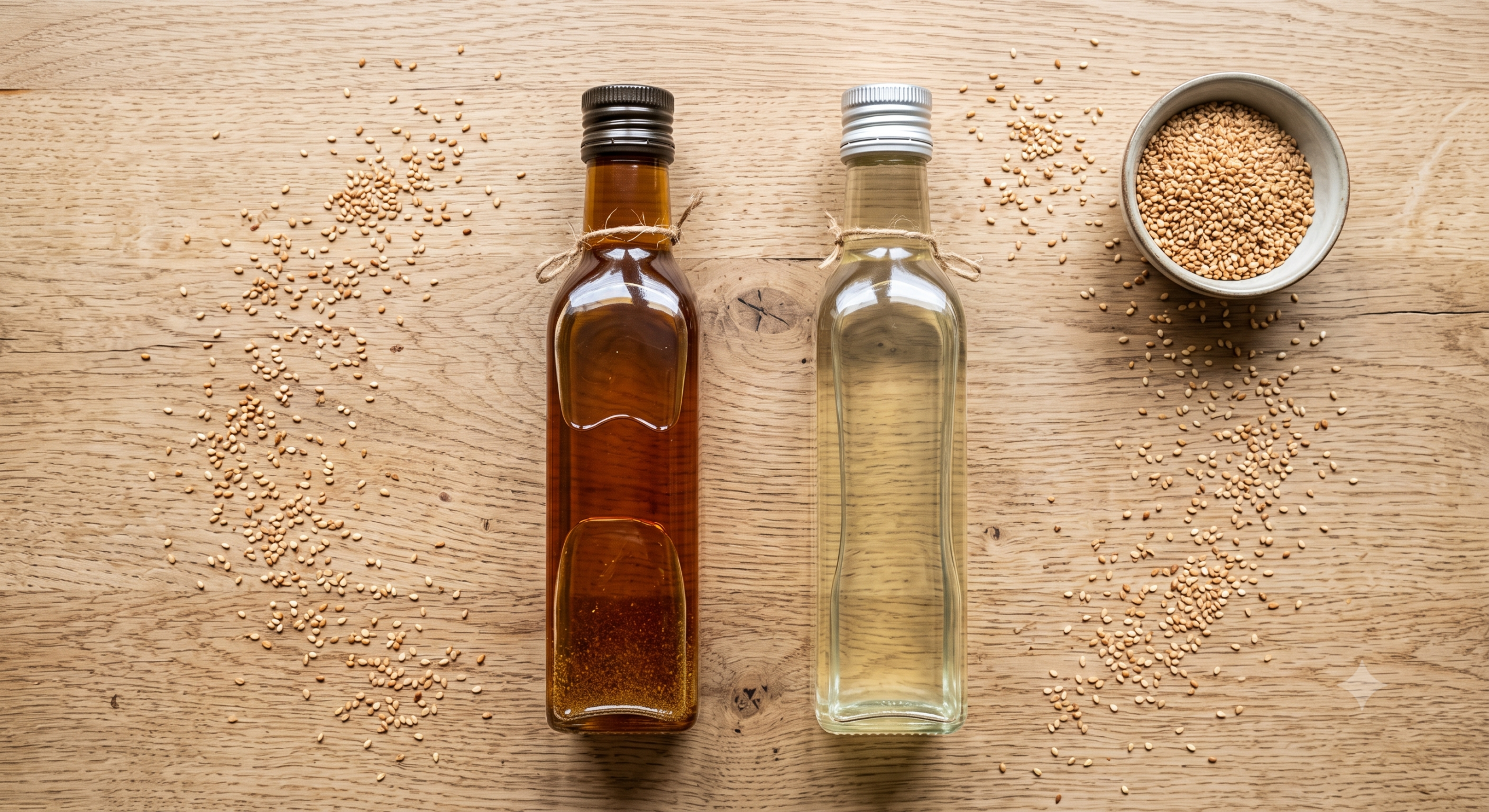
To identify real cold pressed oil: check the colour (rich and dark, not pale), smell it (strong seed smell, not neutral), look for natural sediment at the bottom, and confirm the label says ‘cold pressed’ or ‘wood pressed’ — not just ‘pure’ or ‘natural’. The cold pressed oil market in India has grown rapidly — and so has the number of products that use the label without the process. Walk into any supermarket or scroll through any online health store and you will find dozens of bottles claiming to be cold pressed, wood pressed, chekku, or ghani. Most of them are not. Knowing how to identify cold pressed oil before buying saves you money and ensures you are actually getting the nutritional benefits you are paying a premium for.
Why Fake Cold Pressed Oil Is Such a Common Problem
The price difference between refined and cold pressed oil is significant — sometimes 3 to 4 times more expensive. That gap creates a strong incentive for manufacturers to sell refined oil with cold pressed labelling. FSSAI, India’s food safety regulator, has defined standards for cold pressed oils, but enforcement at the retail level is inconsistent. The result is a market where ‘cold pressed’, ‘wood pressed’, ‘chekku’, ‘kachi ghani’, and ‘virgin’ are used interchangeably — sometimes accurately, often not.
Understanding what genuine wood pressed oil vs refined oil actually looks, smells, and behaves like is the most reliable way to verify quality — regardless of what the label says.
Quick Cheat Sheet — Real vs Fake Cold Pressed Oil
| Sign to Check | Real Cold Pressed Oil ✅ | Fake / Refined Oil ❌ |
| Colour | Rich, natural — golden/brown/green depending on seed | Pale, uniform, too clear — bleached |
| Smell | Strong, characteristic of the seed — nutty, pungent, earthy | Neutral or faintly chemical — deodorised |
| Sediment | Natural sediment at bottom — normal and expected | Crystal clear, no particles — filtered/refined |
| Label | Cold pressed / wood pressed / chekku — method stated clearly | Only says ‘pure’, ‘natural’, ‘virgin’ — no method |
| Smoke point | Lower than refined — groundnut ~160°C, sesame ~175°C | Unusually high smoke point for the oil type |
| Price | Noticeably more expensive than refined versions | Priced same or lower than refined supermarket oil |
6 Signs to Identify Real Cold Pressed Oil
Sign 1 — Colour Is Rich and Natural, Not Pale
This is the easiest visual check. Cold pressed oils retain the natural pigments of the seed they come from. Cold pressed sesame oil is deep golden-amber. Wood pressed groundnut oil is warm golden-yellow. Cold pressed mustard oil has a strong yellow with a greenish tint. Cold pressed coconut oil is clear white when liquid and pure white when solid.
Refined oils go through bleaching — a process that removes natural colour to make the oil look clean and uniform. The result is a pale, watery-looking oil that barely resembles the seed it came from. If cold pressed sesame oil looks pale yellow or almost transparent, it has almost certainly been refined or blended with refined oil. Real cold pressed sesame oil is noticeably dark and rich in colour.
Sign 2 — Strong Characteristic Smell, Not Neutral
Smell is the most reliable single check. Cold pressed oils smell exactly like the seed they came from — because they are extracted without heat that would drive off volatile aromatic compounds.
- Real cold pressed sesame oil smells intensely nutty and roasted — the same smell as fresh til seeds.
- Real wood pressed groundnut oil has a strong, characteristic peanut aroma.
- Real cold pressed mustard oil has a sharp, pungent smell that makes your eyes water slightly.
- Real cold pressed coconut oil smells like fresh coconut — sweet and distinct.
- Real cold pressed flax seed oil has an earthy, slightly fishy smell — many people find it strong.
If any oil smells faintly of almost nothing — neutral, clean, odourless — it has been deodorised. Deodorisation is a high-heat process used in refining. A deodorised ‘cold pressed’ oil is a contradiction in terms. Discard it.
Sign 3 — Natural Sediment at the Bottom
Open any genuine cold pressed oil bottle that has been sitting still for a few days and look at the bottom. You should see natural sediment — tiny particles of the seed, natural waxes, or fine plant matter. This is completely normal and a positive sign. It is not contamination — it is proof that the oil has not been filtered or processed to the point where all natural matter is removed.
Refined oils are crystal clear because they go through filtering, bleaching, and degumming that removes every particle. If your cold pressed sesame or groundnut oil is perfectly clear with zero sediment, it has almost certainly been processed beyond what genuine cold pressing allows. Shake the bottle gently before use — this redistributes the natural sediment.
Sign 4 — Label Says the Method, Not Just the Outcome
This is where most consumers get confused. Words like ‘pure’, ‘natural’, ‘virgin’, ‘organic’, and ‘traditional’ describe the claimed quality of the oil — not the extraction method. None of these words guarantee that the oil was cold pressed.
Words that actually describe the extraction method and matter:
- Cold pressed — oil extracted without heat, below 40°C to 49°C depending on standards.
- Wood pressed — traditional ghani or chekku method using a wooden press, always cold.
- Chekku pressed — same as wood pressed, Tamil/South Indian term.
- Kachi ghani — Urdu/Hindi term meaning raw press, always cold.
- Expeller pressed — uses mechanical pressure but can generate heat — lower quality than cold pressed but better than solvent extracted.
If the label only says ‘pure’ or ‘natural’ without specifying the extraction method, assume it is refined until proven otherwise.
Sign 5 — Price Is Noticeably Higher Than Refined
Genuine cold pressed oil costs more to produce — lower yield per kg of seed, slower process, no chemical solvents to maximise extraction. A litre of cold pressed groundnut oil should cost roughly 2.5 to 3 times more than refined groundnut oil from the same region. Cold pressed sesame oil is even more expensive relative to refined sesame oil.
If you find a product labelled ‘cold pressed’ that is priced at or below the refined version of the same oil — it is not genuinely cold pressed. The economics simply do not work. Brands that price their cold pressed oil at refined-oil prices are either blending with refined oil, mislabelling, or using a process that involves heat and chemicals at some stage.
Sign 6 — Solidifies or Changes in Cold Weather
Many genuine cold pressed oils change texture with temperature. Cold pressed coconut oil solidifies below 24°C — it turns completely white and solid. Cold pressed groundnut oil may turn cloudy or slightly thick in the refrigerator. Cold pressed flax seed oil becomes thicker and more viscous in cold conditions. These are natural fatty acid responses to temperature.
Refined oils are winterised — a process that removes the natural waxes and compounds that would cause cloudiness. If your cold pressed coconut oil stays liquid even in an air-conditioned room in winter, or your groundnut oil remains perfectly clear in the fridge, the oil has been winterised — which is a refining step. Real cold pressed oils behave like the seed they came from.
What to Check on the Label Before Buying
- Extraction method stated clearly — cold pressed, wood pressed, chekku, or kachi ghani.
- Ingredient list — should say only the oil. No additives, preservatives, or antioxidant chemicals.
- Manufacture date and best before date — cold pressed oils have shorter shelf lives. If the best before is 3 years away, the oil has been refined or treated.
- FSSAI licence number — mandatory for all food products sold in India. Absence is a red flag.
- No claims like ‘0% cholesterol’ on vegetable oils — all vegetable oils have zero cholesterol. This is a marketing trick used on low-quality products.
Online Buying — Extra Checks
Most genuine cold pressed oil brands in India sell direct-to-consumer online or through their own websites. When buying online:
- Check if the brand shows photos of their actual extraction process — wood press, chekku, or ghani setup.
- Look for third-party lab test reports for fatty acid profile and absence of chemical solvents — reputable brands publish these.
- Read reviews specifically mentioning smell and colour — genuine buyers almost always comment on the strong smell and dark colour if the oil is real.
- Avoid marketplace listings from unknown sellers at unusually low prices — cold pressed oil resellers often dilute with refined oil.
The Srikruti Naturals Difference
Srikruti Naturals uses traditional wood press (chekku) extraction for all oils. No heat, no chemical solvents, no deodorising, no bleaching. The oils are dark, strongly aromatic, and naturally sediment-bearing — exactly as they should be. What you smell when you open the bottle is what your grandmother’s kitchen smelled like. That is not a coincidence. It is the same process.
Conclusion
Knowing how to identify cold pressed oil before buying protects you from paying a premium for refined oil in a different bottle. The six signs — colour, smell, sediment, label method, price, and cold-weather behaviour — take less than two minutes to check. Use them every time. Real cold pressed oil is darker, stronger-smelling, slightly cloudy, properly labelled, and noticeably more expensive than refined. If any one of those five is off, look for a different brand.
👉 Ready to switch? Shop Srikruti Naturals’ full range of genuine wood pressed cold pressed oils — extracted the traditional chekku way, dark, aromatic, and naturally sediment-bearing
FREQUENTLY ASKED QUESTIONS
Q: How do I know if cold pressed oil is genuine?
Check four things: colour (rich and dark, not pale or bleached), smell (strong and characteristic of the seed, not neutral), sediment (natural particles at the bottom when undisturbed), and label (must say ‘cold pressed’, ‘wood pressed’, ‘chekku’, or ‘kachi ghani’ — not just ‘pure’ or ‘natural’). If any of these four fail, the oil has likely been refined or adulterated.
Q: What colour should real cold pressed sesame oil be?
Real cold pressed sesame oil is deep golden-amber to brown in colour — noticeably darker than refined sesame oil. If sesame oil appears pale yellow or almost transparent, it has been bleached through refining. The colour comes from natural pigments in the sesame seed that are preserved only when the oil is extracted at low temperature without chemicals.
Q: Is sediment in cold pressed oil normal?
Yes. Natural sediment at the bottom of a cold pressed oil bottle is completely normal and a positive quality sign. It consists of tiny seed particles, natural waxes, and plant matter that remain because the oil has not been heavily filtered. Refined oils are crystal clear because these natural components are removed during processing. Shake gently before use to redistribute the sediment.
Q: Why does cold pressed oil smell so strong?
Cold pressed oils smell strongly of the seed they come from because the extraction process preserves all natural aromatic compounds. Refined oils are deodorised at high temperatures, which removes the smell. If a cold pressed oil smells neutral or faintly of nothing, it has been deodorised — which is a refining step that also destroys many of the nutrients that make cold pressed oil worth buying.
Q: Can cold pressed oil be adulterated with refined oil?
Yes, and this is common in India. Blending a small percentage of genuine cold pressed oil with refined oil and labelling the whole product as cold pressed is one of the most common forms of adulteration. Signs of blending include lighter colour than expected, weaker smell, very low price compared to genuine cold pressed options, and no visible sediment. Always buy from brands that show their extraction process and publish third-party lab test reports.
Q: What does ‘wood pressed’ mean on an oil label?
Wood pressed means the oil was extracted using a traditional wooden press — called a chekku in Tamil, ghani in Hindi, or kolhu in some regions. The wooden press operates at low speed and low temperature, generating almost no heat. This preserves the oil’s natural fatty acids, antioxidants, and active compounds fully. Wood pressed is synonymous with cold pressed in Indian traditional oil extraction and is considered the highest quality extraction method.
Q: Does cold pressed oil solidify in the fridge?
Some cold pressed oils solidify or turn cloudy when refrigerated. Cold pressed coconut oil solidifies below 24°C. Cold pressed groundnut oil may go cloudy in the refrigerator. This is a natural response of the fatty acids to cold temperature. Refined oils are winterised — a process that removes the waxes causing cloudiness — so they stay clear in the fridge. If your cold pressed oil stays perfectly clear and liquid even when refrigerated, it has likely been winterised, which is a refining step.